




If you’ve ever visited a busy port or container terminal, you’ve likely seen towering, precision-engineered machines gliding smoothly along fixed rails, efficiently lifting, moving, and stacking shipping containers. These workhorses of port operations are known as Rail-Mounted Gantry (RMG) cranes—a critical component of modern port infrastructure that powers global trade and logistics. But what exactly is RMG in port, and why is it indispensable for today’s high-volume container handling? This guide breaks down everything you need to know about RMG cranes, from their definition and working principles to their key benefits, applications, and future trends.
What Does RMG Stand for in Port Operations?
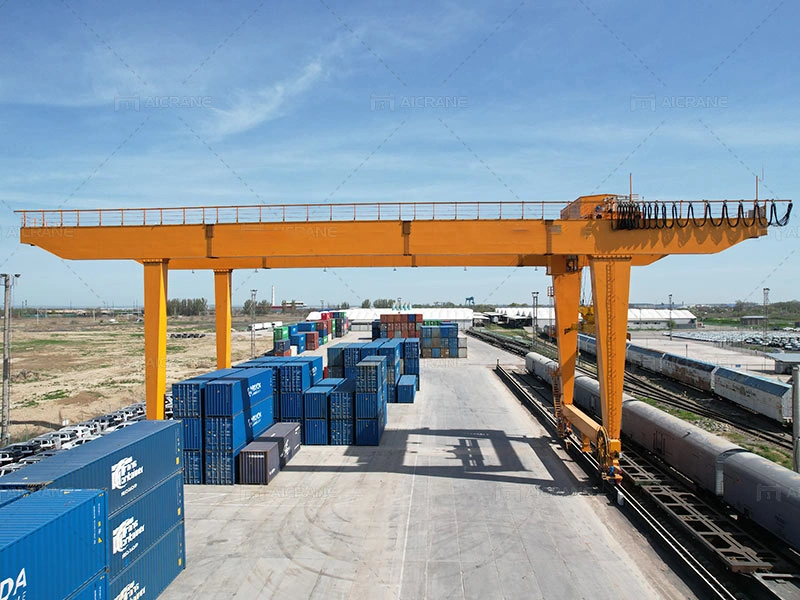
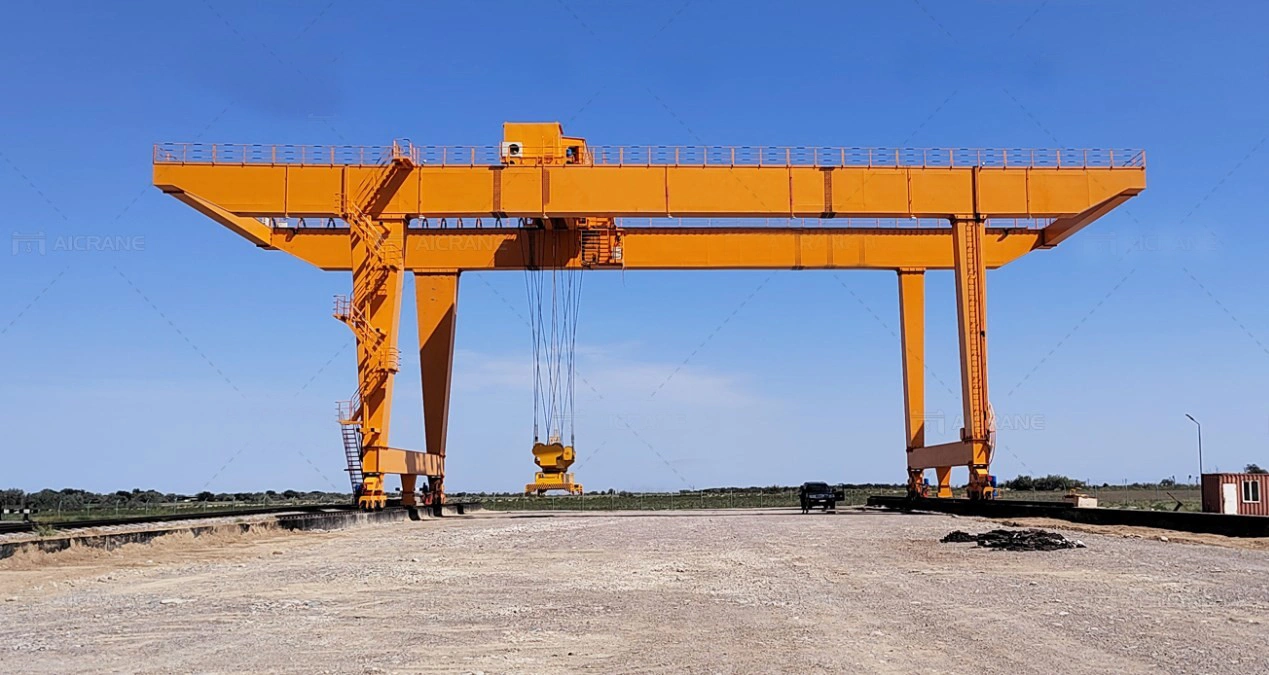
In the context of port and container terminal operations, RMG stands for Rail-Mounted Gantry crane. As the name suggests, these are gantry cranes—characterized by a bridge-like structure supported by two or more legs—that operate exclusively along fixed steel rails embedded in the ground or concrete foundations. Unlike mobile cranes or rubber-tyred gantry (RTG) cranes, RMGs are constrained to their rail paths, making them ideal for repetitive, high-precision tasks in fixed-layout port yards.
RMG cranes are designed to handle the heavy lifting and movement of shipping containers (ranging from 20ft to 45ft and beyond) in port terminals, intermodal yards, and railway freight hubs. They are a cornerstone of efficient container logistics, bridging the gap between ships, trucks, and trains to ensure seamless cargo flow across global supply chains.
How Do RMG Cranes Work in Ports?
The operation of RMG cranes in ports is a precise, coordinated process that leverages advanced technology to maximize efficiency and accuracy. While modern RMGs can be fully automated, semi-automated, or manually operated, their core working principle remains consistent: navigating a three-dimensional coordinate system to move containers with pinpoint precision. Here’s a step-by-step breakdown of their operation:
Instruction Receipt: The RMG crane receives commands from the port’s terminal operating system (TOS), which specifies the location of the target container (e.g., a specific bay, row, and tier in the yard) and its destination (e.g., a truck, train, or another stack).
Spreader Alignment & Grabbing: The crane’s spreader (a specialized tool designed to grip containers) descends to the container. Using guide plates or visual assistance technology, the spreader’s twist locks align perfectly with the container’s corner holes. When the spreader makes contact with the container, it sends a “container detected” signal, and the twist locks rotate to secure the load.
Lifting & Anti-Sway Control: After confirming the container is securely locked, the lifting mechanism raises it to a safe height. To prevent damage or instability, the crane’s control system actively suppresses swaying of the spreader and container during lifting.
Transport & Placement: The gantry and trolley coordinate to move the container horizontally to its target location. Once aligned, the spreader lowers the container gently, the twist locks unlock, and the spreader rises back to its idle position—completing the cycle.
Key Applications of RMG Cranes in Ports
RMG cranes are versatile machines, but their primary role is to optimize container handling in high-volume port environments. Here are their most common applications in port operations:
Container Stacking & Storage: RMGs excel at stacking containers vertically (up to 8-10 tiers high) and horizontally, maximizing the use of available yard space. This high stacking capacity is critical for busy ports where land is a valuable resource.
Intermodal Transfers: They facilitate the transfer of containers between different modes of transport—from ships (working alongside ship-to-shore cranes) to trucks, trains, or barges. This seamless intermodal connectivity is essential for global supply chain efficiency.
Heavy Cargo Handling: Beyond standard containers, RMG cranes can handle oversized or heavy cargo (up to 1000+ tons in some cases), such as steel coils, precast concrete components, or industrial machinery—making them valuable for industrial ports.
Automated Terminal Operations: In smart ports, fully automated RMG cranes operate without human intervention, integrating with the terminal’s TOS to optimize workflow, reduce labor costs, and increase throughput. These cranes can process 25-50 containers per hour, depending on the configuration.
Advantages of RMG Cranes in Port Operations
RMG cranes offer numerous advantages over other material handling equipment (such as RTG cranes, mobile cranes, or bridge cranes), making them the preferred choice for large, high-throughput ports. Here are their key benefits:
Superior Precision: Operating on fixed rails eliminates sway and ensures accurate load placement—critical for stacking containers safely and efficiently. This precision reduces the risk of damage to containers or equipment.
High Efficiency & Throughput: Automated RMGs can operate continuously 24/7 without breaks, significantly increasing port throughput. Their horizontal movement is faster than many other crane types, and dual-spreader configurations allow handling of two 20ft containers or one 40ft container at a time.
Cost-Effective Maintenance: Rail systems are durable and require less maintenance than rubber tires (which wear quickly in harsh port environments). This reduces downtime and long-term operational costs.
Space Optimization: RMGs are freestanding and use vertical space efficiently, allowing them to stack containers higher than RTG cranes. This maximizes yard storage capacity, a key advantage for ports with limited land availability.
Enhanced Safety: Automated RMGs minimize human interaction with heavy loads, reducing the risk of accidents. Manual RMGs also include safety features like overload protection, anti-collision systems, and emergency stop buttons to ensure operator safety.
Energy Efficiency: Most modern RMGs are electrically powered, with features like regenerative power feedback and vector frequency conversion that reduce energy consumption by 25-30% compared to diesel-powered alternatives. This aligns with global sustainability goals and reduces carbon emissions.
RMG vs. RTG Cranes: What’s the Difference?
A common question in port operations is the difference between RMG (Rail-Mounted Gantry) cranes and RTG (Rubber-Tyred Gantry) cranes. While both are used for container handling, they are designed for different use cases. Here’s a clear comparison:
Feature |
RMG Crane |
RTG Crane |
|---|---|---|
Mobility |
Operates on fixed steel rails |
Moves freely on rubber tires |
Flexibility |
Limited to rail path; ideal for fixed layouts |
Highly flexible; can move to any area of the yard |
Load Capacity |
Higher (up to 1000+ tons) |
Lower (up to 50 tons) |
Precision |
Excellent (no sway; pinpoint accuracy) |
Good (may have slight sway) |
Maintenance Cost |
Low (durable rail system) |
High (frequent tire replacement) |
Best For |
High-throughput, fixed-layout ports; automated operations |
Smaller ports; temporary or flexible yard layouts |
Current Trends & Future of RMG in Ports
The global RMG crane market is growing steadily, driven by expanding global trade, port infrastructure development, and the push forntelligentize and sustainability. According to industry reports, the RMG market was valued at USD 1.85 billion in 2024 and is projected to reach USD 3.65 billion by 2032, with a compound annual growth rate (CAGR) of 8.2% from 2025 to 2032. The Asia-Pacific region leads the market, with China accounting for 24.7% of global share, followed by growing demand in the Middle East and Europe.
Key trends shaping the future of RMG in ports include:
Full Automation & AI Integration: The adoption of fully automated RMG cranes is increasing, with AI-powered predictive maintenance, real-time monitoring, and path optimization to minimize downtime and improve efficiency. These systems use machine learning to analyze operational data and predict potential equipment failures before they occur.
Green Energy Transition: Ports are increasingly adopting electric and hybrid RMG cranes to reduce carbon emissions and meet global sustainability regulations. Energy-efficient features like regenerative braking and solar-powered auxiliary systems are becoming standard.
Modular Design & Standardization: Future RMG cranes will feature modular designs and standardized interfaces, making them easier to integrate with existing port systems and reducing maintenance complexity. This allows ports to upgrade their equipment incrementally, rather than replacing entire systems.
Enhanced Connectivity: IoT integration will enable RMG cranes to communicate seamlessly with other port equipment (e.g., ship-to-shore cranes, trucks, and TOS), creating a fully connected, smart port ecosystem. This connectivity improves coordination and reduces bottlenecks in cargo flow.
Conclusion: Why RMG is Essential for Modern Ports
ZEHUA is a leading crane manufacturer in China. With decades of industry experience, we have become a trusted partner in the global material handling solution field. We are committed to providing comprehensive professional services tailored to your specific needs. We recommend the most suitable crane products, offer accurate quotations, and design customized solutions. Welcome to contact us.
HENAN ZEHUA HEAVY INDUSTRY EQUIPMENT CO., LTD
Email: sale@zehuacranes.com
Website: [https://www.zehuacranes.com/]
Whatsapp:86-19562739544


