




Marine cranes are indispensable heavy-duty lifting equipment designed specifically for marine and offshore environments, playing a pivotal role in global maritime operations, port logistics, offshore engineering, and marine transportation. Unlike land-based cranes, these specialized machines are engineered to withstand harsh marine conditions—including saltwater corrosion, strong winds, high waves, and unstable vessel movements—while delivering reliable, precise, and efficient lifting performance. From small fishing vessels to large offshore platforms and container ships, marine cranes are tailored to meet diverse operational needs, making them a cornerstone of the global marine industry.
What Are Marine Cranes? Definition and Core Purpose
A marine crane is a specialized lifting device installed on ships, offshore platforms, barges, or port terminals, designed to handle cargo, equipment, materials, and even personnel in marine settings. Its core purpose is to facilitate safe and efficient loading, unloading, and transfer of heavy loads in environments where land-based lifting equipment is inaccessible or impractical. Marine cranes are engineered with robust structural designs, corrosion-resistant materials, and advanced safety systems to adapt to the unique challenges of the marine environment—such as constant exposure to saltwater, extreme temperatures, and dynamic vessel heel and trim movements.
Key Types of Marine Cranes: Classifications and Applications
Marine cranes come in a variety of configurations, each designed to suit specific vessel types, operational requirements, and load capacities. The most common types include:
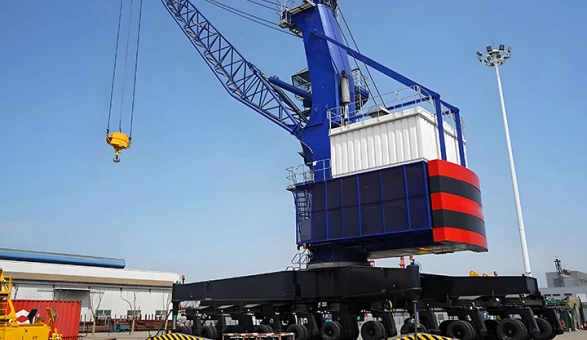
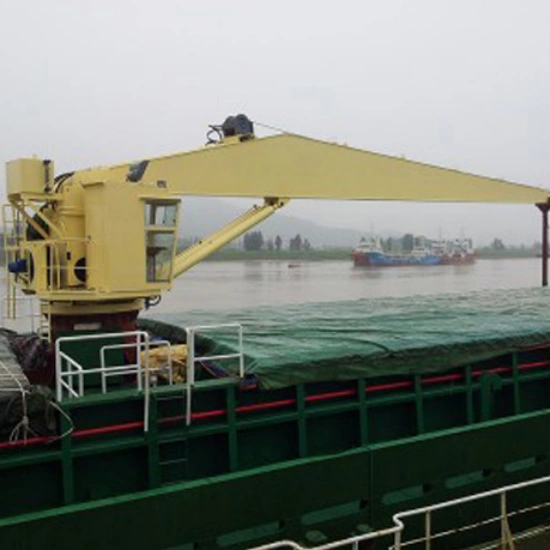
1. Deck Cranes
These cranes occupy minimal deck space, ensuring they do not compromise the vessel’s cargo capacity or navigation performance. They are commonly used for handling containers, bulk goods, and equipment on commercial ships and fishing vessels.
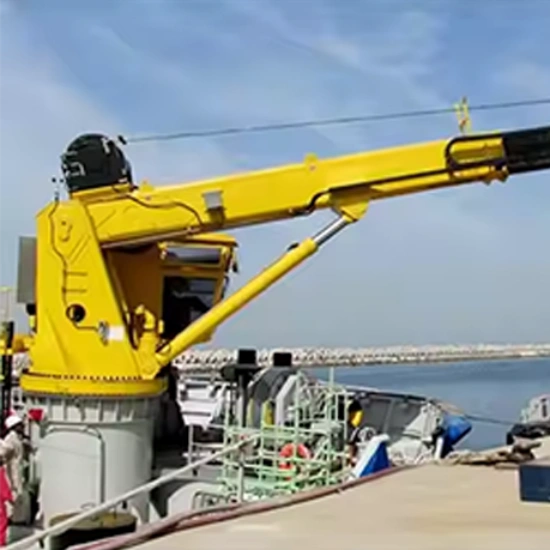
2. Knuckle Boom Cranes
Knuckle boom cranes (also known as articulated cranes) feature a folding boom design, which allows for greater maneuverability and compact storage when not in use. This makes them ideal for vessels with limited deck space, such as fishing boats, supply vessels, and small cargo ships. Knuckle boom cranes offer precise control, even in tight spaces, and are often equipped with torque limiters and other safety features to enhance operational safety.
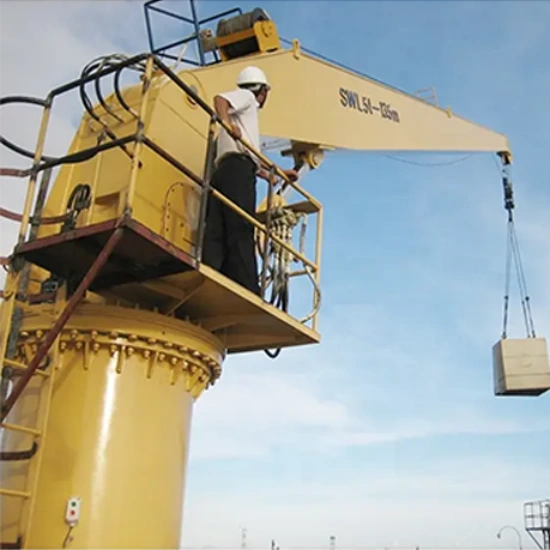
3. Telescopic Boom Cranes
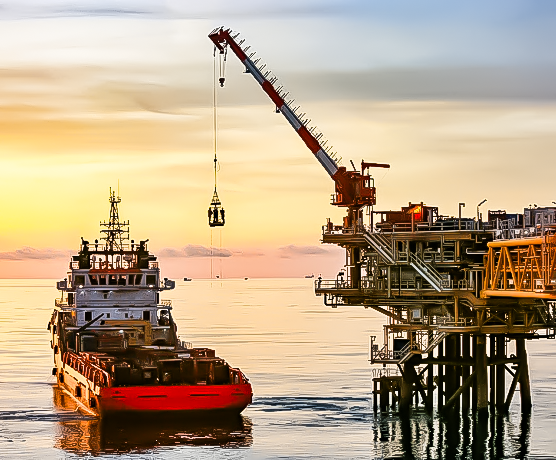
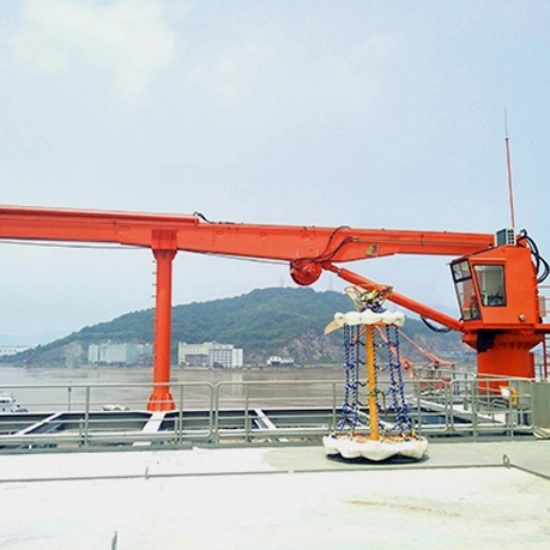
4. Offshore Platform Cranes
Offshore platform cranes are specifically designed for use on offshore oil, gas, and wind platforms. These cranes are engineered to withstand extreme offshore conditions, including strong winds, high waves, and corrosive saltwater, and they often feature, anti-corrosion, and anti-icing systems. They are used for transferring equipment, supplies, and personnel between platforms and supply vessels, as well as for maintenance and repair operations on the platform itself.
How Do Marine Cranes Work?
At their core, marine cranes operate on simple mechanical principles. However, the marine environment adds complexity. Here is a basic breakdown:
1.The Power Source
Most marine cranes use a diesel-hydraulic or electric-hydraulic system. An engine or electric motor drives a hydraulic pump, which pressurizes oil. This pressurized oil flows through hoses to hydraulic cylinders and motors, creating the force needed to move the boom, slew the crane, or lift the load.
2.The Control System
Operators control the crane using:
Local controls – Joysticks and levers inside a cab on the crane
Remote controls – Wired or wireless handheld units
Automated systems – Pre-programmed lifts for repetitive tasks
3.Lifting the Load
When the operator moves a control, hydraulic fluid flows into a cylinder, extending it to raise the boom. A hydraulic winch (a spool of steel wire rope) pays out or winds in to lower or raise the hook. The combination of boom movement and winch action allows precise load positioning.
4.Staying Safe
Modern marine cranes are packed with sensors. These monitor:
Load weight – Prevents overloading (overload protection)
Boom angle and length – Calculates safe operating radius
Vessel tilt – Adjusts for heel and trim
Wind speed – Alerts operator to dangerous conditions
Marine Cranes vs. Land Cranes: What's the Difference?
Many people assume all cranes are similar. In reality, marine and land cranes are built for completely different worlds. Here is a direct comparison:
| Feature | Land Crane | Marine Crane |
|---|---|---|
| Environment | Stable, solid ground | Moving vessel (waves, wind, current) |
| Corrosion risk | Low to moderate | Extreme (saltwater spray) |
| Load rating | Static weight | Dynamic weight (accounting for motion) |
| Safety factor | 3:1 typically | 4:1 or higher |
| Power source | Diesel or electric | Hydraulic (usually) |
| Design priority | Maximum reach and height | Compact stowage and stability |
| Certification | OSHA / local standards | Classification society (DNV, ABS, LR) |
| Can it fold? | Rarely | Often (to save deck space) |
| Typical lifespan | 10–15 years | 20–30 years with maintenance |
How to Choose the Right Marine Crane?
1. What load capacity do I need?
Consider the maximum weight you will ever lift. Then add a safety margin. Most experts recommend choosing a crane with 25–50% more capacity than your typical load.
2. Where will it be used?
Calm waters (harbors, rivers) – Standard hydraulic marine crane is fine.
Rough seas (offshore) – Look for active heave compensation.
Confined spaces – Choose a knuckle boom or foldable design.
3. What is the vessel type?
Small workboat – Lightweight foldable or knuckle boom crane (1–10 tons)
General cargo ship – Medium knuckle boom (10–30 tons)
Offshore supply vessel – Heavy pedestal or telescopic crane (30–150 tons)
Dredger or heavy-lift ship – Stiff boom crane (100+ tons)
4. What certifications are required?
If you operate in international waters, you will need class society certification (DNV, ABS, LR, or BV). Some ports also require local approvals.
5. What is your maintenance capability?
Marine cranes need regular upkeep. If your crew lacks technical skills, choose a simpler design with readily available spare parts.
ZEHUA is a leading crane manufacturer in China. With decades of industry experience, we have become a trusted partner in the global material handling solution field. We are committed to providing comprehensive professional services tailored to your specific needs. We recommend the most suitable crane products, offer accurate quotations, and design customized solutions. Welcome to contact us.
HENAN ZEHUA HEAVY INDUSTRY EQUIPMENT CO., LTD
Email: sale@zehuacranes.com
Website: [https://www.zehuacranes.com/]
Whatsapp:86-19562739544


