Container Straddle Carrier


Introduction
Technical Data
Application
Features
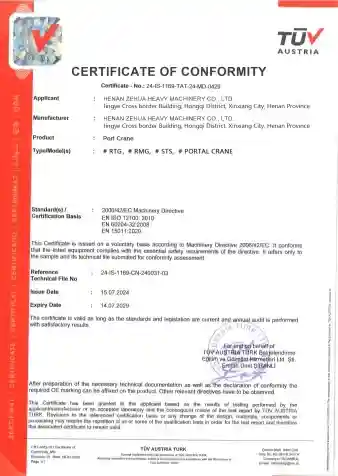
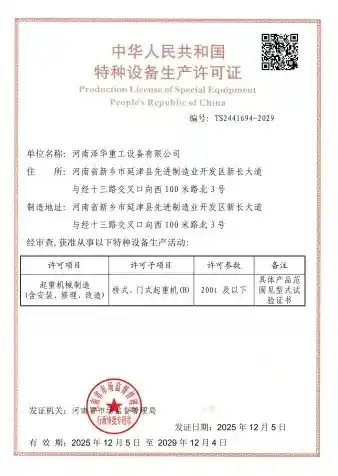
Certificate
Inquiry
PRODUCT INTRODUCTION
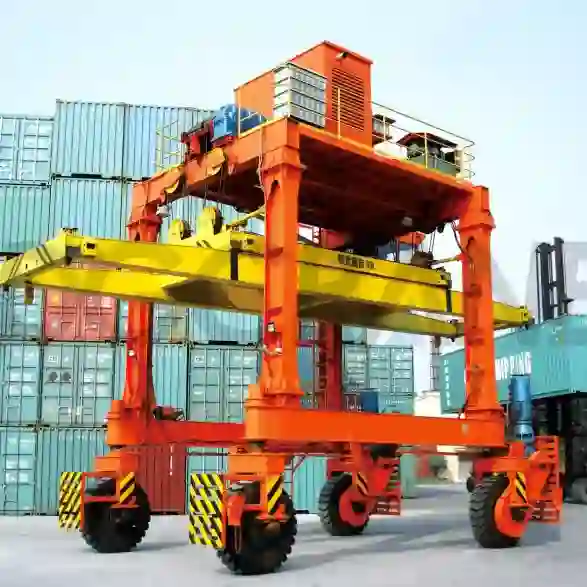
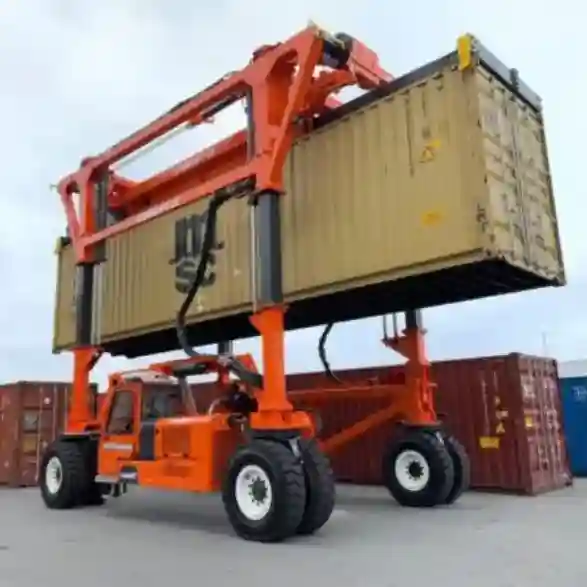
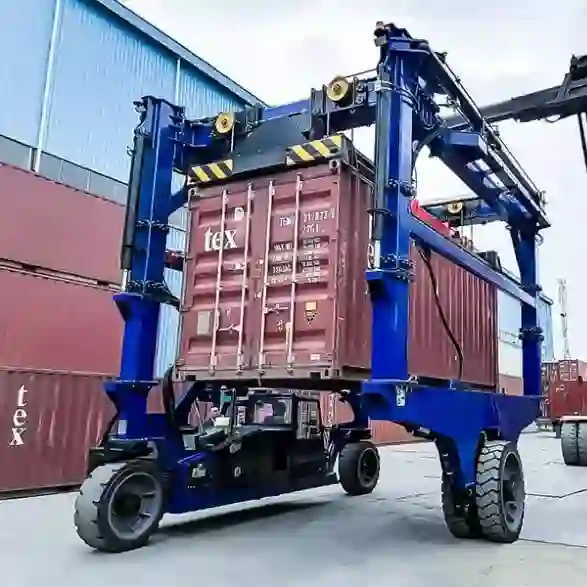
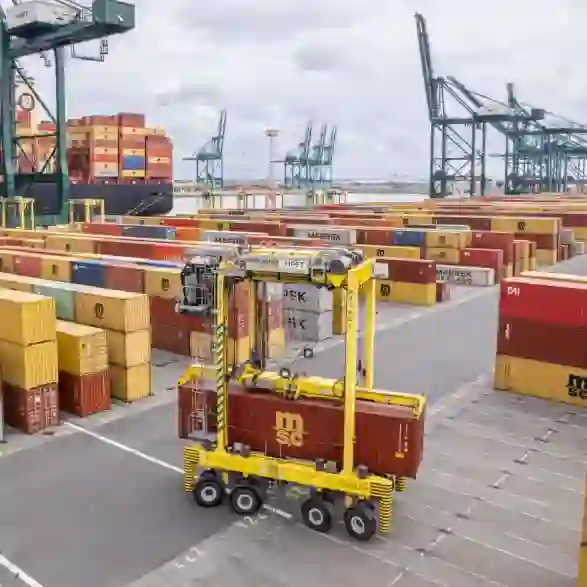
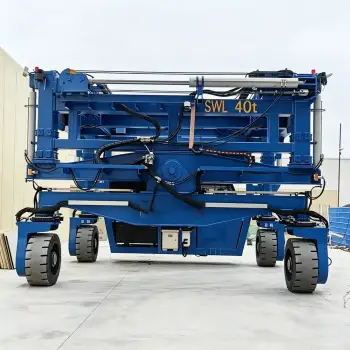
Container straddle carrier (straddlecarrier for short) is suitable for ports and terminals, transporting containers from the front to the yard or quasi containers in the yard for transportation, handling and loading and unloading. Supported on rubber tires, it is often powered by diesel generator, or battery + small power generator set hybrid power. It is composed of large vehicle mechanism, steering mechanism, gantry, power system, shock absorption and energy storage system, and special container spreader. The design, manufacture and inspection are in accordance with the latest domestic and international standards such as FEM, DIN, IEC, AWS and GB.
TECHNICAL DATA
| Parameter | Specification | Parameter | Specification |
|---|---|---|---|
| Rated Loading Capacity | 10-60t | Max. Lifting Height | 30m |
| Warranty | 1year | Machinery Test Report | Provided |
| Video outgoing-inspection | Provided | Core Components | Engine, Bearing, Gearbox, Motor, Gear, Pump, steel |
| Rated Lifting Moment | According to your demand | Span | 18m-30m |
| Place of Origin | Henan, China | Weight (KG) | 300000 kg |
| Crane type | Straddle Carrier Container | Working Class | A5-A8 |
| Power Source | (customizable) |
RELATED PRODUCTS

APPLICATION
1. Ports & Maritime Terminals
The straddle carrier is the workhorse of modern container ports and marine terminals. It plays a pivotal role in the entire container handling cycle—from discharging vessels alongside the quay to transporting containers to stacking yards, and from loading road trucks at the gate to repositioning empties. Its ability to work independently without ground-level assistance allows ship-to-shore cranes to maintain peak productivity. Ports handling high-volume transshipment cargo, feeder vessel operations, and mixed import/export flows rely heavily on straddle carriers to ensure rapid turnaround times and optimal yard density.
2. Intermodal Rail & Multimodal Logistics Hubs
In rail-connected freight terminals and inland intermodal hubs, straddle carriers bridge the gap between rail, road, and storage. They efficiently unload trains, stage containers in buffer zones, and reload trucks or other railcars with minimal delay. Their high maneuverability and compact footprint make them ideal for congested rail yards where space is constrained. These machines are especially valuable in double-stack rail operations and just-in-time supply chain networks, where precise sequencing and rapid modal transfers are critical to maintaining schedule integrity.<br>
3. Inland Container Depots & Freight Stations
For inland logistics parks, container freight stations (CFS), and empty container depots, straddle carriers provide a cost-effective alternative to fixed gantry systems. They support consolidation and deconsolidation activities, move containers to and from warehouse bays, and manage large fleets of empty boxes with high stacking density. In regions where land costs are high, their ability to stack three to four containers high significantly improves yard utilization. They also facilitate container inspection, repair, and maintenance operations by easily transporting units to dedicated service zones.