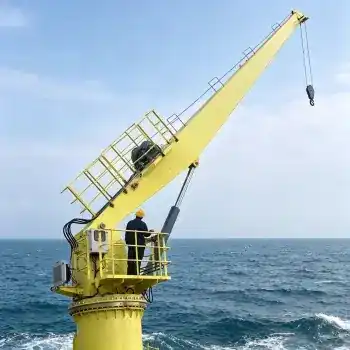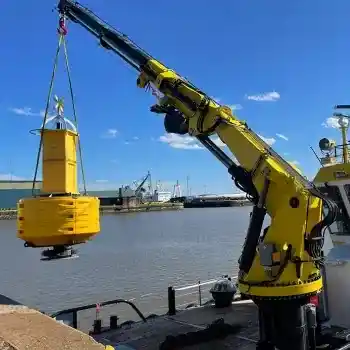
Hatch Cover Gantry Crane
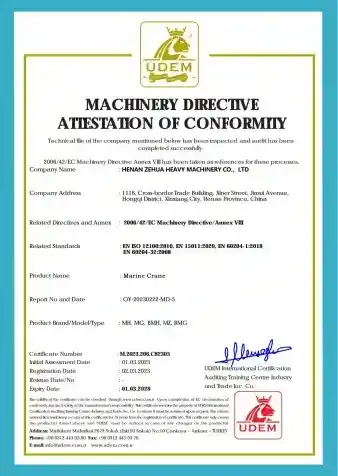
Authentication mark:
For customized products, please fill out information and submit the form.
Capacity:
3~40t
Lifting Height:
Customized
Voltage/Hertz:
220V, Customized
Working Class:
A3
Span:
8~20m
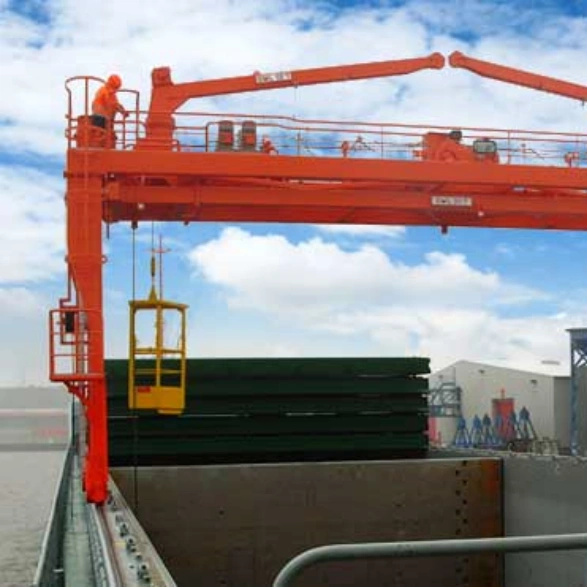
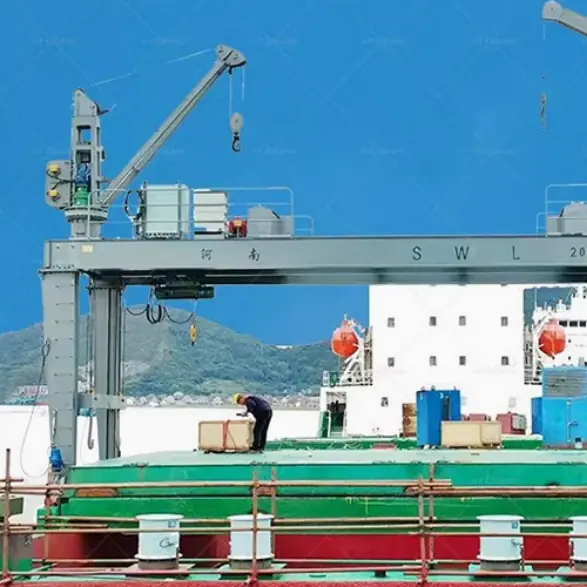
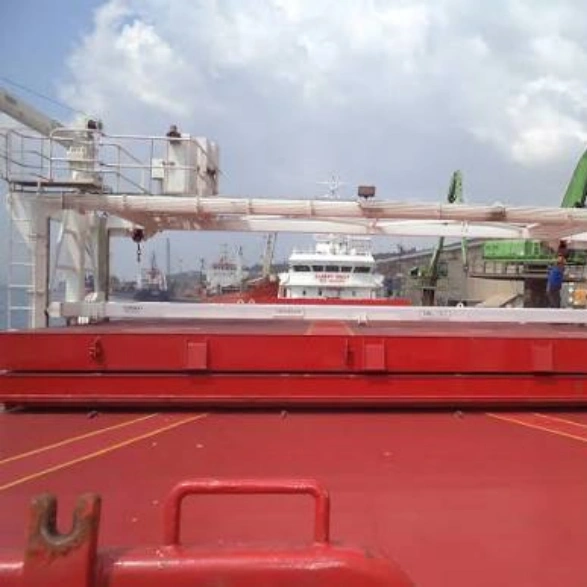
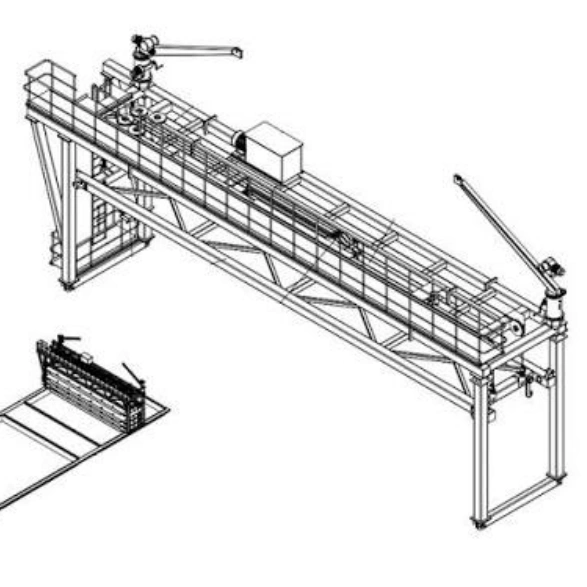
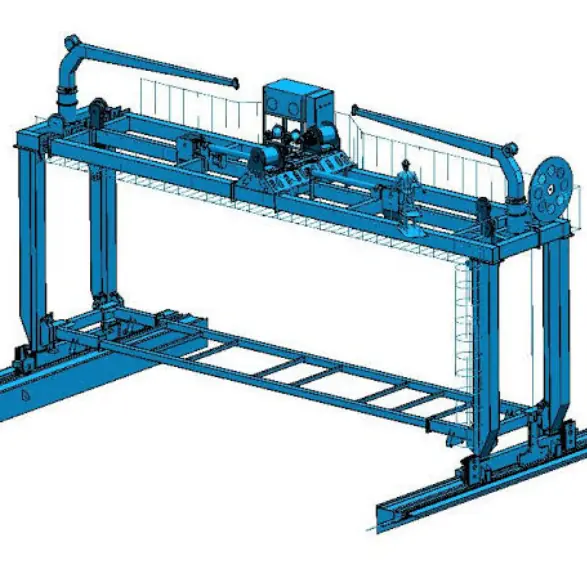
Apply: Marine hatch cover crane is a kind of special gantry crane used on ship deck for moving or lifting the hatch cover.
CONSULT
WHATSAPP
Introduction
Technical Data
Application
Features
Certificate
Inquiry
PRODUCT INTRODUCTION
The Hatch Cover Gantry Crane is a specialized mobile lifting system designed for the efficient handling, removal, and replacement of hatch covers on bulk carriers, container vessels, general cargo ships, and other marine vessels. Hatch covers are large, heavy steel structures that seal cargo holds to protect goods from weather, seawater, and environmental elements. Their safe and efficient handling is critical to vessel turnaround time, cargo operations, and crew safety.
TECHNICAL DATA
APPLICATION
1. Bulk Carrier Operations
Hatch Cover Removal & Replacement: Lifting and removing large, heavy steel hatch covers to expose cargo holds for loading/unloading of bulk commodities such as coal, iron ore, grain, and aggregates.
Hatch Cover Stacking: Stowing removed hatch covers on designated deck areas or stacking them atop adjacent covers to maximize deck space during cargo operations.
Multi‑Hold Operations: Traveling along deck rails to service multiple cargo holds sequentially, enabling continuous loading/unloading without crane repositioning delays.
2. General Cargo & Breakbulk Vessels Breakbulk Access: Removing hatch covers to allow crane access for loading/unloading project cargo, machinery, steel products, timber, and palletized goods. Partial Opening: Precisely positioning hatch covers to partially expose holds while maintaining weather protection for remaining cargo sections. Deck Storage Management: Stacking and rearranging hatch covers on deck to accommodate irregularly shaped cargo stowage.
3. Container Vessels Hatch Cover Handling for Below‑Deck Stowage: Lifting and removing hatch covers to access container cell guides below deck for loading/unloading containers. Twin‑Hatch Vessels: Handling large, segmented hatch covers on vessels with wide beam configurations, often using dual hoists for balanced lifting. Rapid Turnaround: Enabling fast hatch cover removal and replacement to minimize port stay duration and maximize vessel productivity.

4. Ro‑Ro & Vehicle Carrier Vessels Access to Lower Decks: Removing hatch covers to allow vehicles, heavy equipment, and machinery to be loaded/unloaded via internal ramps. Weather Protection Management: Replacing hatch covers quickly to protect sensitive cargo (vehicles, machinery) from rain and salt spray during transit. Flexible Deck Configurations: Moving and repositioning hatch covers to create open deck layouts for oversized or irregular cargo.
5. Offshore Supply Vessels (OSV) Cargo Hold Access: Handling hatch covers on supply vessels to access below‑deck storage for pipes, chemicals, drilling equipment, and bulk materials. Deck Space Optimization: Stowing hatch covers efficiently to maximize available deck area for deck cargo when holds are not in use. Harsh Weather Operations: Operating safely in challenging sea conditions with robust design and fail‑safe features. 6. Heavy Lift & Project Cargo Vessels Large Hatch Cover Handling: Lifting oversized, reinforced hatch covers designed for heavy lift vessels carrying modules, turbines, and industrial equipment. Specialized Lifting Configurations: Using multi‑point lifting arrangements or spreader beams to handle non‑standard hatch cover shapes and sizes. Tandem Operations: Coordinating multiple gantry cranes or dual hoists for handling extra‑wide or segmented hatch covers.
2. General Cargo & Breakbulk Vessels Breakbulk Access: Removing hatch covers to allow crane access for loading/unloading project cargo, machinery, steel products, timber, and palletized goods. Partial Opening: Precisely positioning hatch covers to partially expose holds while maintaining weather protection for remaining cargo sections. Deck Storage Management: Stacking and rearranging hatch covers on deck to accommodate irregularly shaped cargo stowage.
3. Container Vessels Hatch Cover Handling for Below‑Deck Stowage: Lifting and removing hatch covers to access container cell guides below deck for loading/unloading containers. Twin‑Hatch Vessels: Handling large, segmented hatch covers on vessels with wide beam configurations, often using dual hoists for balanced lifting. Rapid Turnaround: Enabling fast hatch cover removal and replacement to minimize port stay duration and maximize vessel productivity.
4. Ro‑Ro & Vehicle Carrier Vessels Access to Lower Decks: Removing hatch covers to allow vehicles, heavy equipment, and machinery to be loaded/unloaded via internal ramps. Weather Protection Management: Replacing hatch covers quickly to protect sensitive cargo (vehicles, machinery) from rain and salt spray during transit. Flexible Deck Configurations: Moving and repositioning hatch covers to create open deck layouts for oversized or irregular cargo.
5. Offshore Supply Vessels (OSV) Cargo Hold Access: Handling hatch covers on supply vessels to access below‑deck storage for pipes, chemicals, drilling equipment, and bulk materials. Deck Space Optimization: Stowing hatch covers efficiently to maximize available deck area for deck cargo when holds are not in use. Harsh Weather Operations: Operating safely in challenging sea conditions with robust design and fail‑safe features. 6. Heavy Lift & Project Cargo Vessels Large Hatch Cover Handling: Lifting oversized, reinforced hatch covers designed for heavy lift vessels carrying modules, turbines, and industrial equipment. Specialized Lifting Configurations: Using multi‑point lifting arrangements or spreader beams to handle non‑standard hatch cover shapes and sizes. Tandem Operations: Coordinating multiple gantry cranes or dual hoists for handling extra‑wide or segmented hatch covers.
FEATURES
1
Enhanced Operational Efficiency: Rapid hatch cover removal and replacement significantly reduces cargo hold access time, accelerating vessel turnaround and berth productivity.
2
Improved Crew Safety: Eliminates the need for manual hatch cover handling or rigging by ship’s crew, reducing the risk of injuries associated with heavy lifting.
3
Precision Positioning: Gantry structure provides stable, controlled lifting with minimal swing, allowing precise alignment of hatch covers onto deck stowage or adjacent covers.
4
Space Optimization: Self‑propelled, rail‑mounted design allows the crane to service multiple holds while maintaining a compact footprint; collapsible versions minimize deck obstruction when stowed.
5
Marine Durability: Constructed with corrosion‑resistant materials, marine‑grade coatings, and sealed components to withstand saltwater exposure, humidity, and harsh weather.
6
Versatile Lifting Configurations: Available with single or dual hoists, spreader beams, and remote control options to accommodate various hatch cover sizes, weights, and vessel designs.
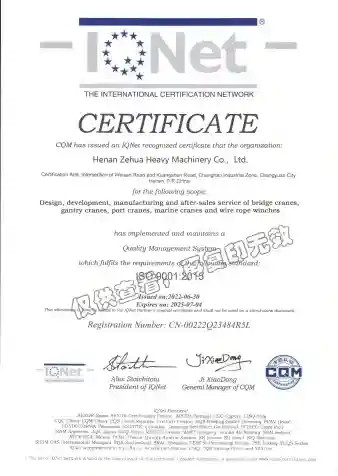
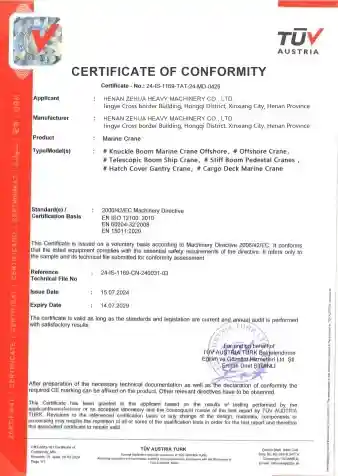
CERTIFICATE
RELATED PRODUCTS