
Single Girder Electrically Suspended Overhead Crane


Introduction
Technical Data
Application
Features
Certificate
Inquiry
PRODUCT INTRODUCTION
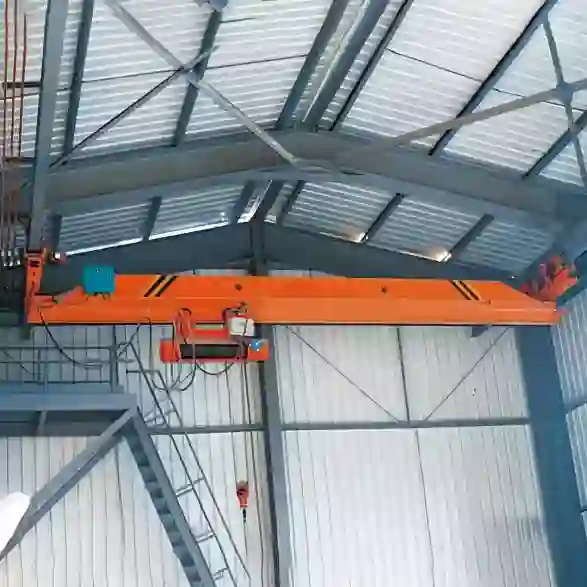
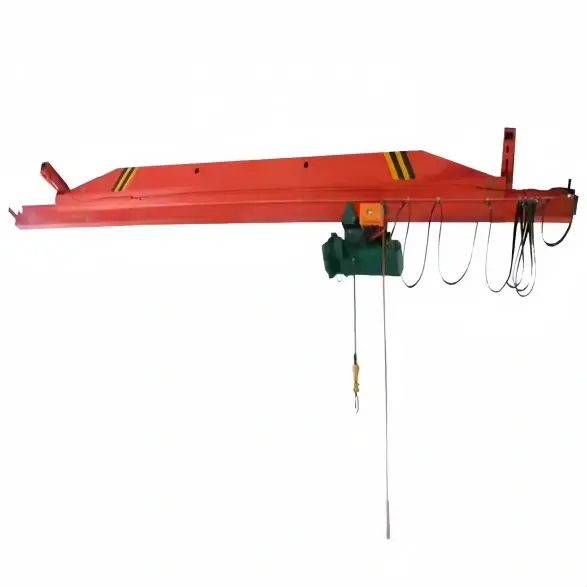
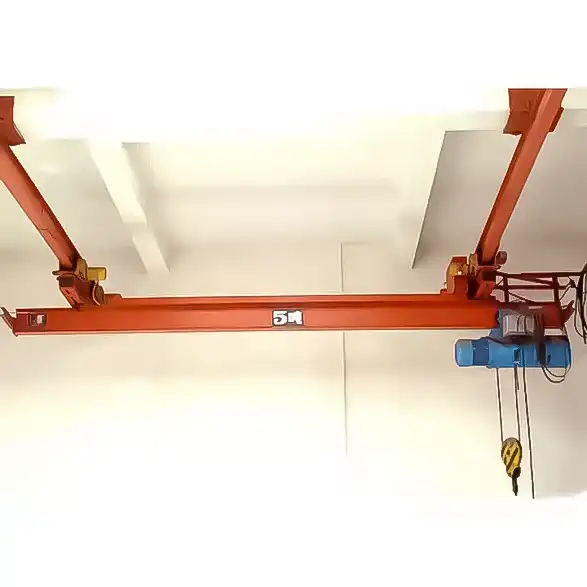
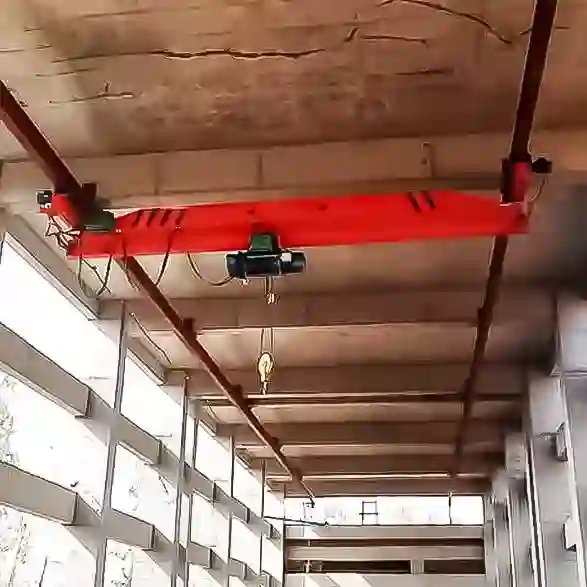
The Single Girder Electrically Suspended Overhead Crane is a space-efficient material handling solution where the crane bridge is suspended directly from the overhead building structure or runway beams, rather than running on freestanding rails. This design eliminates the need for floor-supporting columns, maximizing usable floor space for production, storage, or vehicle movement. The crane is electrically powered for both bridge travel and hoist operations, providing smooth, fatigue-reducing performance compared to manual or push-type systems.
TECHNICAL DATA
| Parameter | Specification | Parameter | Specification |
|---|---|---|---|
| Product Name | Single Girder Electrically Suspended Overhead Crane | Lifting Capacity | 0.5 – 10 ton (up to 20 ton available) |
| Span Length | 3 – 16 m | Lifting Height | 6 – 18 m (up to 30 m available) |
| Work Duty Class | A3 – A5 | Lifting Speed | 8/0.8 m/min (dual speed) / 7/0.7 m/min |
| Cross Travel Speed (Trolley) | 20 m/min | Long Travel Speed (Crane) | 20 / 30 m/min |
| Core Components | Motor, electric system, hoist, end beam, gearbox | Control Method | Pendant control / Wireless remote control / Cabin control |
| Power Supply | (customizable) | Protection Class | IP44 – IP55 |
| Working Temperature | -20°C to +45°C | Warranty | 1 Year |
| Machinery Test Report | Provided | Video Outgoing Inspection | Provided |
| Place of Origin | Henan, China | Painting Color | Yellow / Customized |
RELATED PRODUCTS

APPLICATION
1.This crane is widely used in manufacturing workshops and assembly lines, where floor space must remain unobstructed for worker movement, equipment layout, and automated guided vehicles (AGVs), while still providing reliable overhead lifting for components and tooling.
2.It is essential in warehousing and distribution centers, where the suspended design allows cranes to operate beneath mezzanines, sprinkler systems, or HVAC ducts, moving pallets, cartons, and bulky items without interfering with storage rack layouts.
3.The crane is ideal for food processing and packaging plants, where smooth, electrically controlled lifting prevents contamination risks from manual chain hoists, and the column-free design simplifies cleaning and sanitation routines.
4.In textile mills and printing factories, this crane handles heavy fabric rolls, paper reels, or dye drums across wide production floors, with electric travel reducing operator fatigue and improving workflow efficiency.