




What Is a Port Crane?
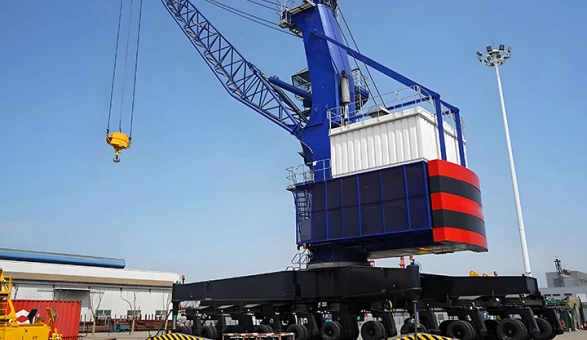
A port crane, also known as a ship-to-shore crane, is a heavy-duty machine that is used to load and unload cargo from ships and containers. The large steel structures are crucial components of the shipping industry as they speed up the transfer of goods, making it possible to move large volumes of cargo in a short time frame.
The term 'port crane' refers to any heavy-duty equipment that is used in a shipping terminal or port to handle containers, goods, and other bulky objects. They come in a range of shapes, sizes and capacities, and are designed to handle different types of cargo. Some of the most common types of port cranes include gantry cranes, rubber tyred gantry cranes, ship cranes, and rail-mounted cranes.In this article, we will break down the primary types of port cranes, their specific functions, and the cutting-edge trends (like electrification) that are shaping the future of the industry.
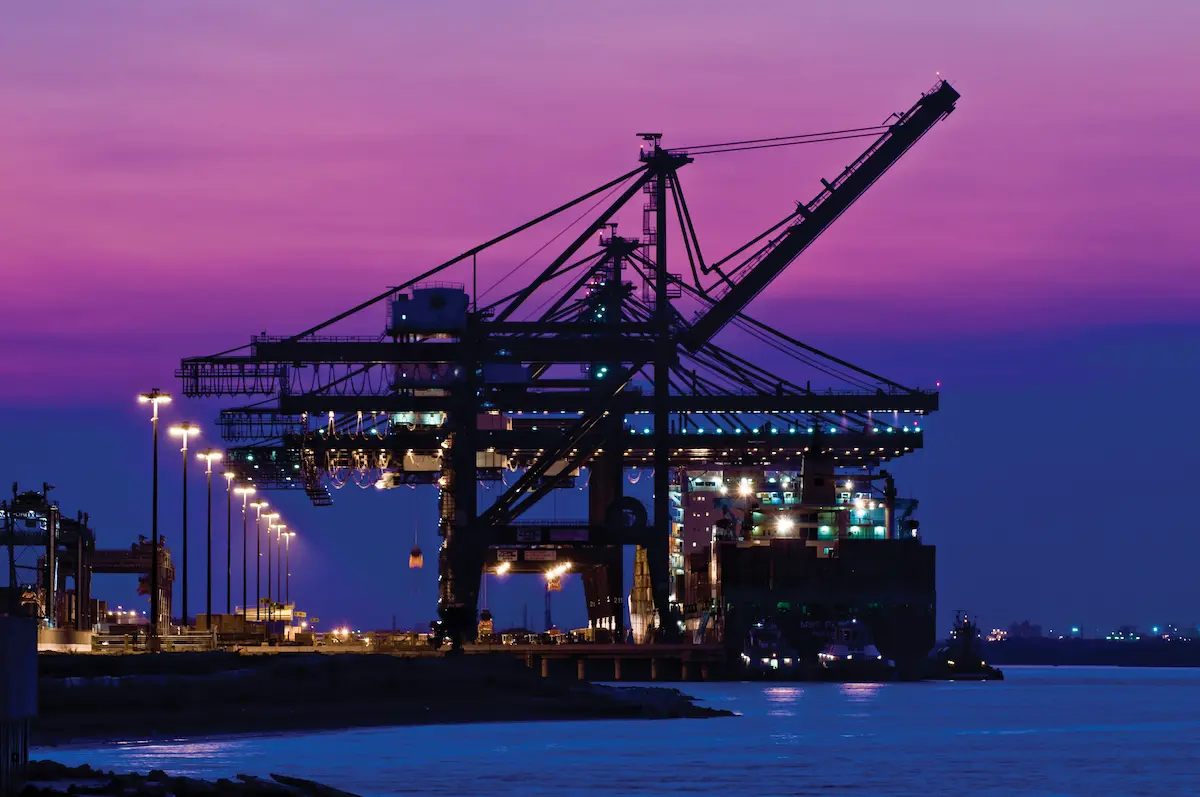
Key Components and Technology
While they vary in shape and size, most port cranes share common engineering marvels:
The Structure: Built from high-strength steel with marine-grade coatings to resist constant corrosion from salt spray and humidity .
The Spreader: The specialized device that latches onto a container via twist locks. Modern spreaders can adjust length to handle different container sizes (20ft, 40ft, 45ft) automatically .
Control Systems: Advanced PLC (Programmable Logic Controller) systems and sensors monitor load weight, sway, and position. Anti-sway technology is critical for safety and speed, ensuring the container doesn't swing dangerously during high-speed moves .
The Main Types of Port Cranes
1.Ship-to-Shore (STS) Cranes: The Waterfront Giants
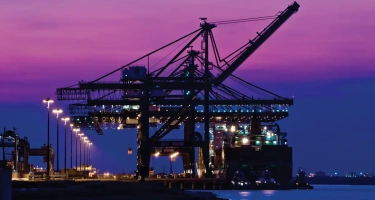
STS cranes, also known as quay cranes, are the largest and most recognizable structures in a container port. They are permanently fixed to the wharf, running on rails along the length of the berth.
Primary Function:
To load and unload container ships. Their entire design is optimized for one task: reaching across a massive vessel to retrieve containers efficiently.
Key Characteristics:
Mobility: Rail-mounted. They move horizontally along the dock to align with different bays on the ship.
Structure: Features a long, horizontal boom that extends over the water. This boom often hinges up to allow ships to pass by.
Outreach: Defined by how many rows of containers they can reach across a ship (e.g., Panamax, Post-Panamax, Super Post-Panamax).
Speed: Designed for high-speed "dual cycle" operations (lifting a box off, placing a new box on) to minimize vessel turnaround time.
Pros:
Unmatched Efficiency: Built specifically for ship-to-shore transfer.
High Lift Capacity: Can handle the heaviest containers and specialized cargo.
Cons:
Fixed Location: Cannot leave the quayside.
High Infrastructure Cost: Requires a reinforced wharf and dedicated power supply.
Vessel Dependency: Can only work on the ship at the berth.
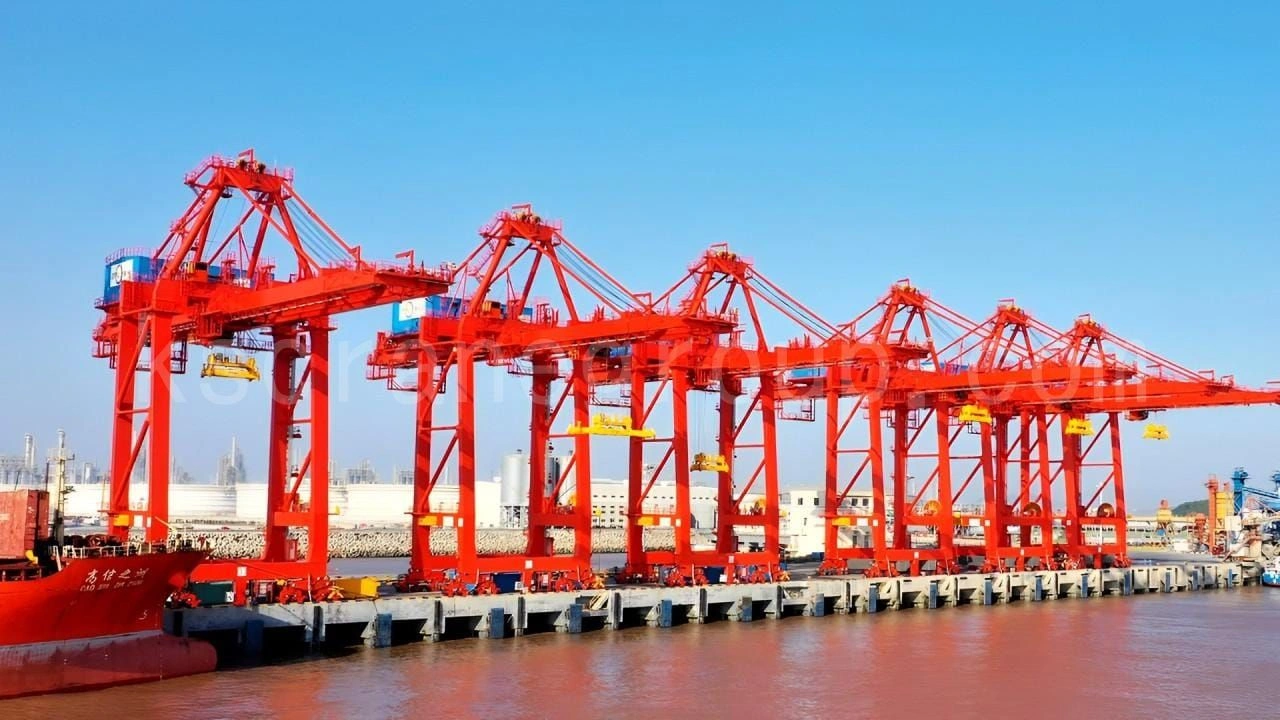
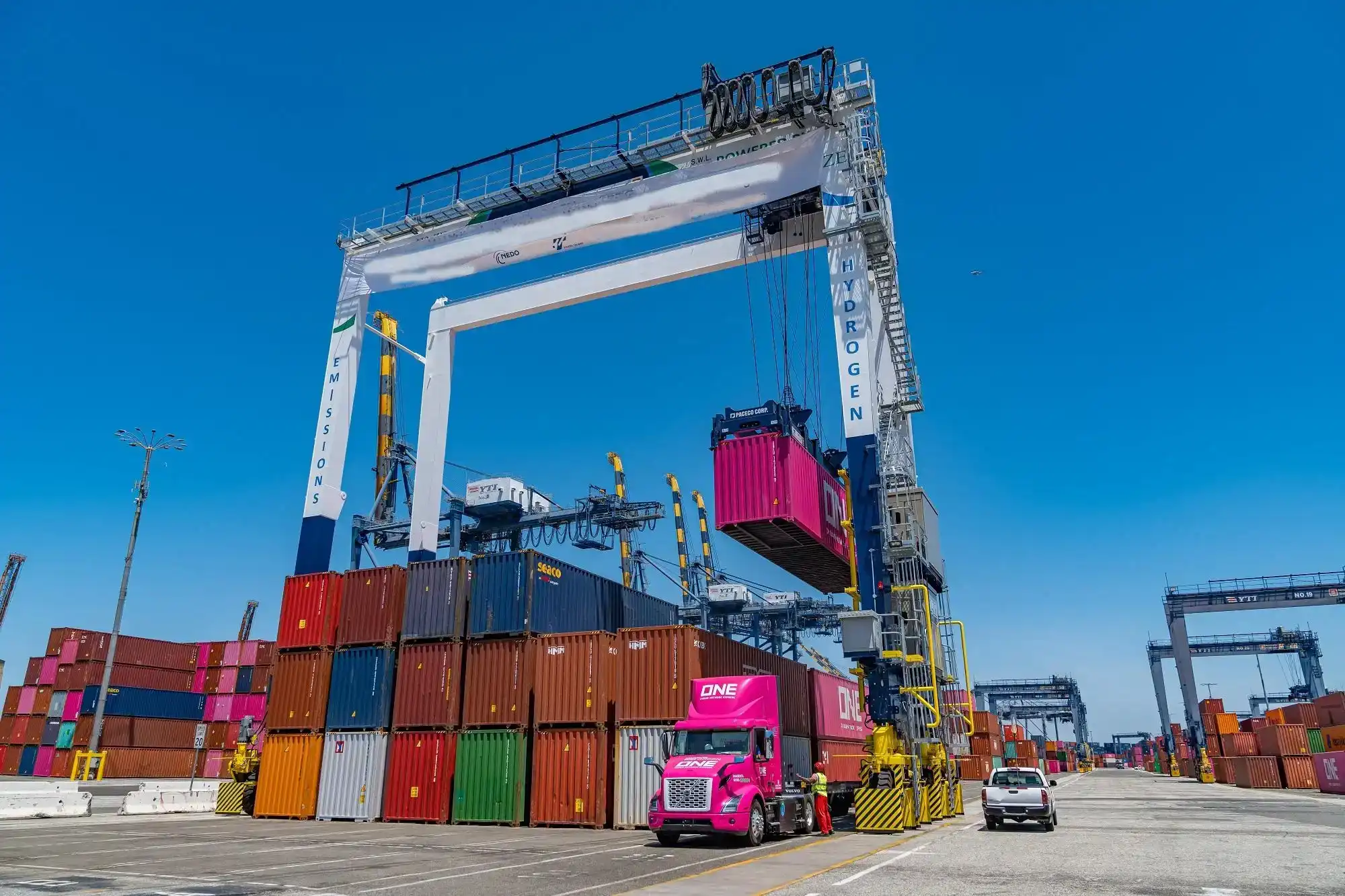
2. Rubber-Tired Gantry (RTG) Cranes: The Yard Workhorses
RTG cranes are mobile gantry cranes that run on rubber tires. They are the most common type of yard crane in operation today, famous for their flexibility.
Primary Function:
To move containers between transport vehicles (like trucks or shuttle carriers) and the storage stacks, and to organize the stacks themselves.
Key Characteristics:
Mobility: Rubber tires allow them to turn 90 degrees and move from one container row to another.
Power: Traditionally diesel-powered, though many modern ports are retrofitting them with electric motors or using hybrid models to reduce emissions.
Span: Typically spans about 6 to 7 rows of containers plus a truck lane, and can stack containers 4 to 5 high (1-over-4 or 1-over-5).
Pros:
Flexibility: Can be moved anywhere in the yard. If a section of the port gets congested, RTGs can be re-deployed.
Lower Infrastructure Cost: No need for embedded rails, making yard construction cheaper and faster.
Scalability: Easy to add more units to a growing terminal.
Cons:
Emissions: Traditional diesel models contribute to port pollution.
Operator Skill: Steering on rubber tires requires more skill to keep the crane aligned perfectly with container rows.
Slower Travel: They move slower than rail-mounted alternatives when traveling long distances across the yard.
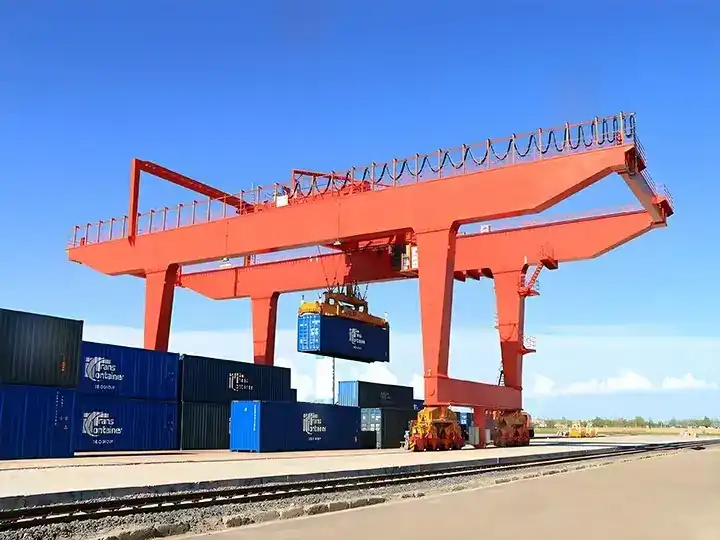
3. Rail-Mounted Gantry (RMG) Cranes: The Automation Champions
RMG cranes are similar in appearance to RTGs, but they run on steel rails fixed to the ground. They are often larger, faster, and more precise than their rubber-tired cousins.
Primary Function:
Like RTGs, they handle yard stacking and truck/train loading. However, due to their precision, they are the preferred choice for Automated Stacking Crane (ASC) systems and rail terminals.
Key Characteristics:
Mobility: Fixed to a rail track. They cannot leave their designated lane.
Size: Can be built much wider and taller than RTGs. Some can span over 15 rows of containers and stack 7 or 8 high.
Automation: Their fixed path makes them ideal for fully automated operations with no operators in the cab.
Pros:
High Density: Because they are so wide, they can utilize yard space more efficiently, reducing the need for multiple lanes.
Speed and Precision: Faster travel speeds along the rails and precise positioning, which is essential for automated stacking.
Green Operations: Usually electric-powered via the grid, resulting in zero on-site emissions.
Cons:
Inflexibility: Once the rail is laid, the crane is stuck in that specific block. If the layout needs to change, moving the crane requires major civil works.
Higher Initial Investment: Installing the concrete beams and rails adds to the upfront cost.
Blockage Risk: If one RMG in a block breaks down, it can potentially block the others unless the system is designed for cross-over.
Head-to-Head Comparison
To make the differences clear, here is a quick comparison table:
| Feature | STS Crane | RTG Crane | RMG Crane |
|---|---|---|---|
| Primary Location | Waterside (Quay) | Landside (Yard) | Landside (Yard / Rail Head) |
| Mobility | Rail-mounted on wharf | Rubber Tires (Flexible) | Steel Rails (Fixed Path) |
| Power Source | Electric (Grid) | Diesel / Hybrid / Electric | Electric (Grid) |
| Typical Span | 20+ rows of containers | 6-7 rows + truck lane | Up to 15+ rows |
| Stacking Height | N/A (Only transfers) | 4-5 high | 6-8 high |
| Key Advantage | Ship unloading speed | Yard flexibility | Density & Automation |
How to Choose the Right Port Crane
There is no single "best" crane; it depends entirely on the terminal's strategy.
For a high-volume deep-sea terminal handling the world's largest vessels, you need STS cranes on the water and Automated RMGs on the land to maximize storage density.
For a medium-sized terminal with fluctuating cargo volumes, STS cranes paired with RTGs offer the flexibility to adapt to changing yard layouts without massive infrastructure investments.
For an intermodal rail terminal moving containers between trucks and trains, RMGs are the clear winner due to their wide span and ability to straddle multiple rail tracks.
Conclusion
From the towering STS cranes plucking boxes from the world's largest ships to the flexible mobile harbor cranes handling mixed cargo, port cranes are the heartbeat of global trade. They are no longer just simple lifting machines; they are intelligent, data-driven, and increasingly electric assets designed for maximum efficiency.
ZEHUA is a leading crane manufacturer in China. With decades of industry experience, we have become a trusted partner in the global material handling solution field. We are committed to providing comprehensive professional services tailored to your specific needs. We recommend the most suitable crane products, offer accurate quotations, and design customized solutions. Welcome to contact us.
HENAN ZEHUA HEAVY INDUSTRY EQUIPMENT CO., LTD
Email: sale@zehuacranes.com
Website: [https://www.zehuacranes.com/]
Whatsapp:86-19562739544


