




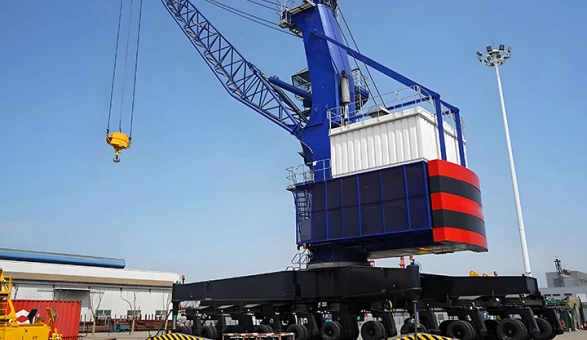
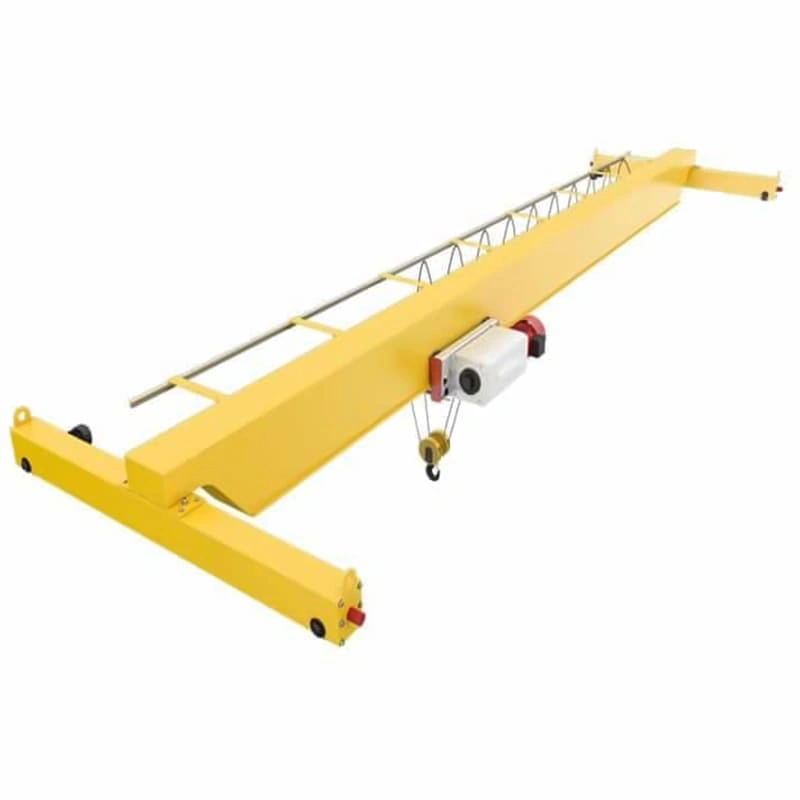
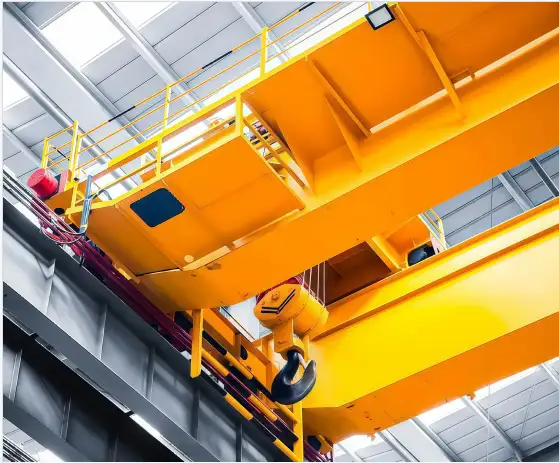
What is a Rubber Tyred Gantry (RTG) Crane?
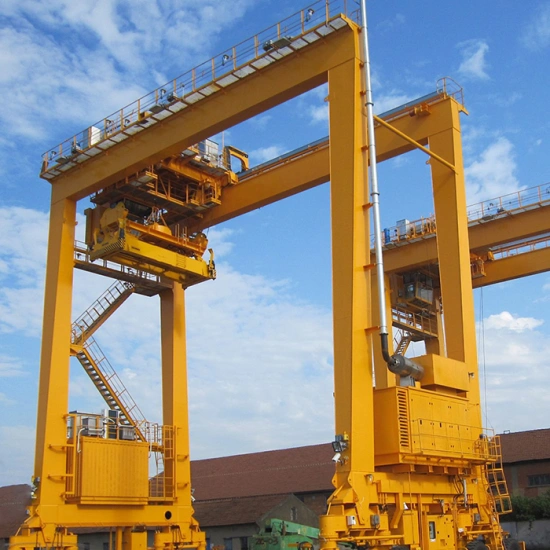
A Rubber Tyred Gantry Crane is a large, self-propelled gantry crane used primarily in port container terminals for stacking and transporting shipping containers. Unlike its fixed-track cousin, the Rail Mounted Gantry (RMG) crane, the RTG moves on custom-designed, heavy-duty rubber tires. This allows it to travel freely across the terminal yard, typically between container blocks and transfer areas.
An RTG crane spans a width of six-plus-one (six container rows and one truck lane) or seven-plus-one configurations, enabling it to stack containers several rows wide and up to five high.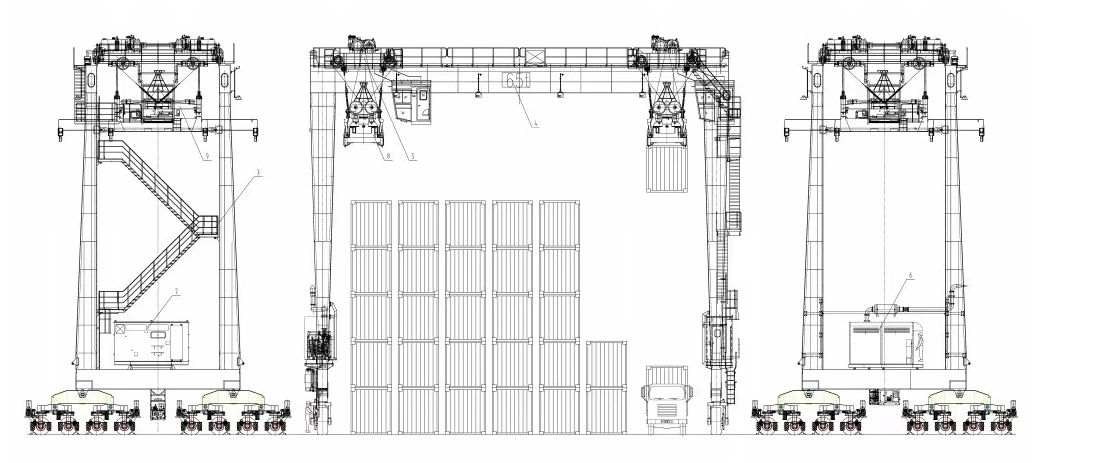
Key Components and How It Works
Gantry Structure: The steel frame that spans the container rows, providing the crane's characteristic portal shape.
Lifting Spreader: The specialized attachment at the end of the hoist mechanism that securely locks onto a container’s corner castings. Modern spreaders are often telescopic to handle containers of different standard lengths (20ft, 40ft, 45ft).
Hoist Mechanism: The system of motors, cables, and drums that raises and lowers the spreader and container.
Trolley: Moves horizontally along the gantry beam, carrying the hoist and spreader to position the container accurately over a stack or a waiting truck.
Rubber Tires & Drive System: Large, heavy-duty tires (usually eight or more) provide mobility. Each tire is often independently driven and steered, offering remarkable maneuverability.
Operator Cab: Traditionally, the crane is controlled from an elevated cab that provides the operator with a clear view of the stacking area. Increasingly, RTGs are being equipped for remoteoperation or full automation.
Major Advantages of RTG Cranes
Unmatched Flexibility & Mobility: This is the RTG’s defining benefit. Operators can easily reposition RTGs to different yard blocks based on shifting operational needs, berth assignments, or cargo volume.
High Density Stacking: By stacking containers multiple rows wide and several tiers high, RTGs maximize the utilization of valuable terminal real estate.
Reduced Ground Congestion: RTGs can service trucks directly within their lane, minimizing the need for other equipment like reach stackers in the immediate stacking area, leading to smoother traffic flow.
Proven Technology & Reliability: As a mature technology, RTGs are known for their robust design and operational reliability, with a vast global base of experienced technicians and parts availability.
Gradual Modernization Path: Existing RTG fleets can often be retrofitted with new control systems, eco-friendly hybrid or electric drives, and automation kits, protecting initial investments.
The Step-by-Step Working Cycle of an RTG Crane
Let's follow a typical container move cycle: Picking up a container from a terminal truck and stacking it in the yard.
Step 1: Positioning and Alignment
The yard dispatcher sends an instruction to the RTG operator (onsite or remote).
The operator drives the RTG crane using precise joystick controls, maneuvering it so that the targeted truck lane and container stack are perfectly within its span. The independent wheel steering allows for crabbing (diagonal movement) and tight turns.
Step 2: Spreader Engagement
The trolley moves horizontally along the gantry beam to position the spreader directly over the container on the truck.
The operator lowers the spreader. Using a combination of cameras and laser guidance systems, the spreader's twistlocks (rotating conical pins) align with the container's corner castings.
Once aligned, the twistlocks rotate and extend, securely locking into the castings. Sensors confirm a positive lock before any lift occurs.
Step 3: Hoisting and Clearance
The hoist motor engages, winding the cables to lift the container clear of the truck. The system manages load sway automatically.
Once at a safe height, the truck can drive away.
Step 4: Trolley and Gantry Travel
The operator moves the trolley (with the suspended container) to the correct stack position along the beam.
Simultaneously or sequentially, the entire RTG crane may travel forward or backward on its tires to align with the precise stack row and tier.
Step 5: Lowering and Placement
The hoist carefully lowers the container onto the stack or onto another container. Precision is critical—often within centimeters.
The twistlocks retract and rotate back to their disengaged position, releasing the container.
Step 6: Spreader Retraction
The empty spreader is hoisted up, and the trolley returns to a neutral position, ready for the next cycle.
Conclusion: A Symphony of Coordinated Movements
The working of a Rubber Tyred Gantry Crane is not a single action but a complex symphony of coordinated movements. Its efficiency stems from the seamless integration of structural strength, powerful machinery, precise control, and increasingly, intelligent software. By combining lateral mobility on rubber tires with precise vertical and horizontal load handling, the RTG crane solves the critical space-utilization and logistics puzzle at the heart of global container trade, proving that this decades-old technology remains indispensable through continuous innovation.
FAQ:1. What is an RTG Crane?
A Rubber Tyred Gantry (RTG) Crane is a large, self-propelled gantry crane used primarily in port container yards and logistics hubs. Its defining feature is its mobility on rubber tires, allowing it to travel freely within the yard to handle loading, unloading, stacking, and transferring of shipping containers.
2. Where are RTG Cranes primarily used?
Their main applications include:
Container Terminal Yards: For storage, organization, and transfer of containers to/from trucks and trains.
Inland Ports and Logistics Centers: As key equipment for container handling and intermediate storage.
Large Industrial Sites: For moving heavy machinery or large materials.
3. What's the difference between an RTG and an RMG?
RTG (Rubber Tyred Gantry): Operates on a paved yard surface, offering high mobility and flexibility to move between different yard blocks. It has a lower initial investment but typically requires an operator.
RMG (Rail Mounted Gantry): Runs on fixed tracks, providing superior positioning accuracy and speed, and is easier to fully automate. It serves dedicated, high-volume stack areas but lacks mobility.
HENAN ZEHUA HEAVY INDUSTRY EQUIPMENT CO., LTD
Email: sale@zehuacranes.com
Website: [https://www.zehuacranes.com/]
Whatsapp:86-19562739544


