What is a Quay Ship to Shore Container Crane? The Ultimate Guide to STS Cranes

What is Quey Ship to shore Container Crane?

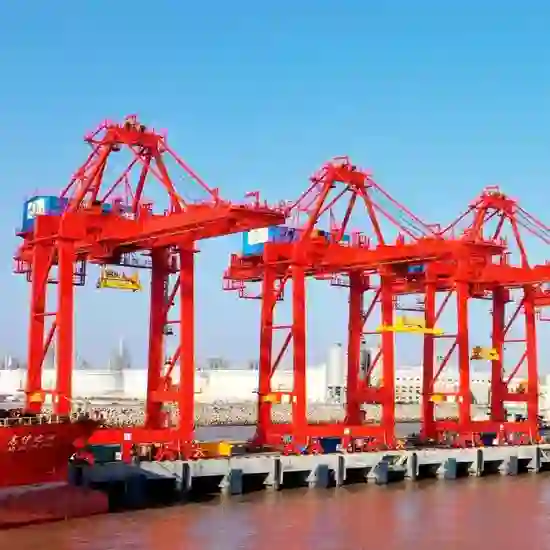
In the high-stakes environment of modern global trade, efficiency at the port is everything. At the heart of this operation stands a colossal piece of engineering: the Quay Ship to Shore Container Crane, commonly known as an STS Crane (Ship-to-Shore) or simply a Quay Crane. These massive structures are the workhorses of container terminals, serving as the critical link between sea and land.

For logistics professionals, port operators, and engineers, understanding the intricacies of this machinery is essential. This guide provides a deep dive into what quay cranes are, how they are built, the technology that drives them, and the trends shaping their future.

Quey Ship to shore Container Crane 2.png


Definition and Core Function

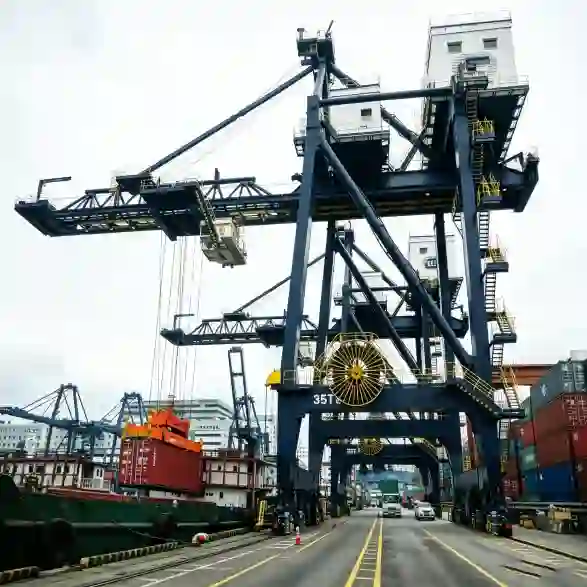
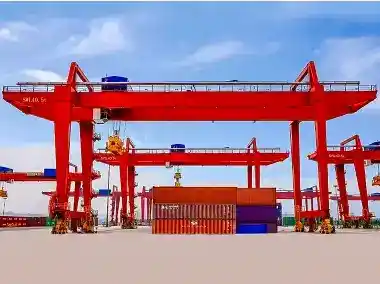
Quay Ship to Shore Container Crane is a type of large dockside gantry crane specifically designed for loading and unloading intermodal shipping containers from vessels. Installed permanently on rails along the wharf (the quay), these cranes span the width of a container ship, allowing them to reach across the vessel to retrieve or place containers .

The primary function of an STS crane is to seamlessly transfer containers between the ship and the terminal. It lifts containers from the ship"s hold or deck, transfers them landside, and places them onto waiting horizontal transport equipment—such as Automated Guided Vehicles (AGVs), straddle carriers, or trucks. This process is reversed for loading vessels .

Without these giants, the rapid turnaround of massive container ships—some carrying over 20,000 TEUs (Twenty-foot Equivalent Units)—would be impossible.

Key Structural Components

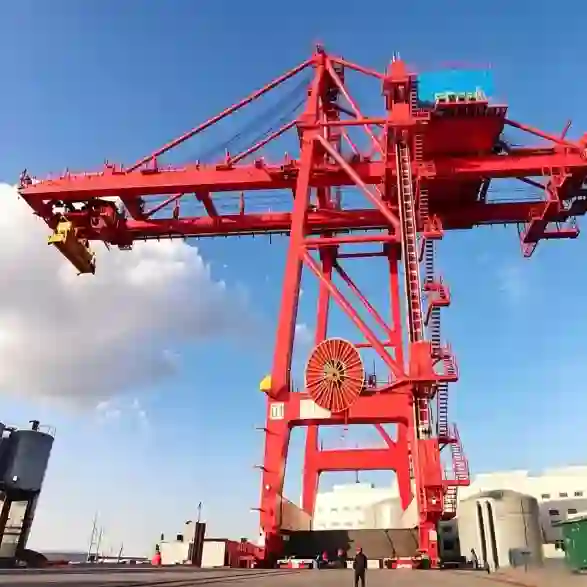
A quay crane is a complex system of mechanical and structural elements. Understanding its anatomy is key to appreciating its capability. Modern STS cranes are typically composed of the following main parts :

Gantry Frame (The Legs): This is the massive, A-frame structure that supports the entire crane. Made of high-strength steel, it straddles the wharf. It is mounted on bogie trucks (sets of wheels) that run along rail tracks, allowing the entire crane to move longitudinally along the berth to service different sections (bays) of a ship.

  1. The Boom (The Girder): The horizontal beam that extends out over the ship. It is often designed to be luffing (hinged), meaning it can be raised to allow ships to navigate in and out of the port safely and lowered into a horizontal position during operations . The section over the ship is the "waterside boom," and the section over the quay is the "landside boom" or backreach.

  2. Trolley and Hoist System: The trolley is the mechanism that travels back and forth along the boom. Suspended from the trolley is the hoist, a powerful winch system of wire ropes and pulleys that lifts and lowers the cargo.

  3. The Spreader: This is the critical interface between the crane and the container. It is a specialized frame that attaches to the trolley via ropes. The spreader features twist locks that lock into the corner castings of a container. Modern spreaders are telescopic, meaning they can adjust their length to handle different container sizes (20ft, 40ft, 45ft) automatically .

  4. Operator Cab/Control Room: In conventional cranes, an operator sits in a cab attached to the trolley for the best possible view. In modern, automated terminals, this cab is replaced by remote-control stations located in an office building, where operators oversee multiple cranes via cameras and sensors.

Technical Specifications and Parameters

Quay cranes are not one-size-fits-all. Their specifications are tailored to the types of vessels they serve. The industry has evolved through classifications based on vessel size, from Panamax (fitted to pass through the old Panama Canal) to Super Post-Panamax and now Megamax, designed for the largest Ultra Large Container Vessels (ULCVs) .

Key technical parameters include :

Parameter Description Typical Range (Modern Cranes)
Lifting Capacity The maximum weight the crane can lift (under the spreader or under the hook). 35 – 65 tons (and increasing)
Outreach The maximum horizontal distance from the waterside rail to the far side of the ship. Determines how wide a vessel the crane can service. 30 – 70+ meters
Lifting Height The height above the rail (wharf level) the spreader can reach, necessary to clear the highest stacks on mega-ships. 25 – 55+ meters
Backreach The distance from the landside rail to the point where the trolley stops inland. 10 – 25 meters
Rail Gauge The distance between the two rails the crane travels on. A wider gauge provides more stability. 16 – 30.5 meters


How a Quay Crane Works: The Operation Cycle

The operation of an STS crane is a precise ballet of coordinated motion. A typical unloading cycle involves :

  1. Positioning: The trolley moves to a specific cell on the ship.

  2. Landing and Locking: The spreader is lowered onto the container. Twist locks engage automatically.

  3. Hoisting: The container is lifted vertically out of the cell.

  4. Trolley Traverse: The trolley travels landside along the boom, carrying the container.

  5. Lowering and Release: The container is lowered onto a waiting AGV, truck, or transfer point. The twist locks release.

  6. Return: The empty spreader travels back to the ship to begin the next cycle.

This entire process takes only a few minutes, with modern cranes capable of handling 30-40 moves per hour.

Types of Quay Cranes

Technological advancements have led to several specialized types of STS cranes :

  1. Single-Trolley Crane: The most common type, featuring one trolley that moves the container directly from the ship to the quay. It is simpler and has lower maintenance costs.

  2. Dual-Trolley Crane: Designed for high-efficiency and automated terminals. It features a main trolley (waterside) that moves containers from the ship to a platform on the crane itself. A second trolley (landside) then picks up the container from the platform and places it onto AGV . This decouples the ship operation from the land operation, dramatically increasing throughput by up to 80-100 TEU/h. However, these cranes are heavier, more expensive, and more complex .

  3. Automated STS Cranes: These cranes integrate advanced sensor systems (like LiDAR and GPS), OCR (Optical Character Recognition) for container ID, and AI-driven control systems. They can operate fully automatically or semi-automatically, optimizing paths and reducing human error .

Automation and The Future of STS Cranes

The trend in port equipment is unequivocally toward automation and intelligence. The quay crane of the future is being shaped by several key innovations :

Remote Operating Stations (ROS): Operators are moving out of the cab and into ergonomic office environments. Using high-definition cameras and sensor feedback, they can monitor and control multiple cranes, improving safety and comfort.

Anti-Sway Technology: Electronic control systems now actively dampen the swing of the spreader and container, allowing for faster and more precise positioning, even in windy conditions .

Integration with Port Ecosystems: Modern STS cranes are nodes in a connected network. They communicate directly with automated yard equipment. For example, when an automated straddle carrier is in place, the crane receives a signal to release the container, creating a seamless handoff .

Megamax Designs: To accommodate the latest class of container ships (24+ rows wide), cranes must have ever-greater outreach and lifting height, pushing structural engineering to its limits.

Conclusion

The Quay Ship to Shore Container Crane is more than just a crane; it is a testament to human engineering and the backbone of global container logistics. From its towering steel structure and precise spreader to its sophisticated control systems, every element is optimized for speed, safety, and reliability.

As the shipping industry continues to demand faster turnaround times and greater efficiency, STS cranes will continue to evolve, becoming larger, smarter, and more integrated into the fully automated ports of tomorrow. For any port looking to remain competitive, investing in the right quay crane technology is not an option—it is a necessity.

FAQ

1. What does STS stand for in shipping?

STS stands for Ship-to-Shore. It refers to the process of transferring cargo from a vessel to the land (and vice versa). An STS Crane is the specific equipment designed to perform this task for containerized cargo.


2. What is the difference between a Quay Crane and a Gantry Crane?

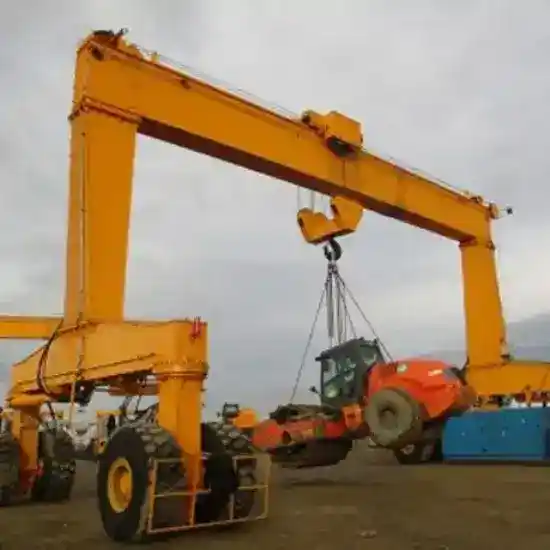
While the terms are often used interchangeably, "Quay Crane" specifically refers to the cranes operating on a wharf (quay) to handle ships. "Gantry Crane" is a broader term for any crane where the hoist is mounted on a bridge or girder supported by legs that run on rails. An STS Crane is a specific type of rail-mounted gantry crane designed for container ship operations. (Note: This is different from a Rubber-Tired Gantry (RTG) crane, which is used in the container yard to stack boxes).


3. How much does a Ship to Shore Crane cost?

A new, large Ship to Shore (STS) crane is a multi-million dollar investment. Prices can range from $5 million to over $15 million depending on the size (outreach, height), specifications, level of automation, and technology integration. Dual-trolley or fully automated cranes sit at the higher end of this range.

HENAN ZEHUA HEAVY INDUSTRY EQUIPMENT CO., LTD  
Email: sale@zehuacranes.com
Website: [
https://www.zehuacranes.com/]
Whatsapp:86-19562739544