




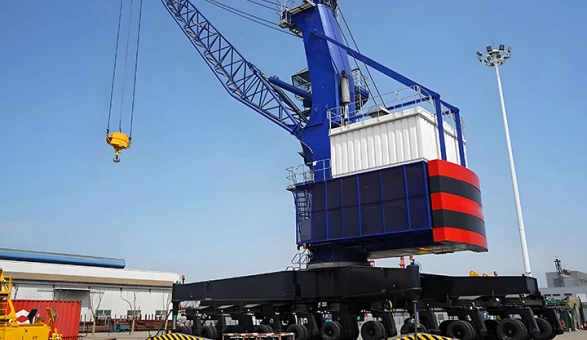
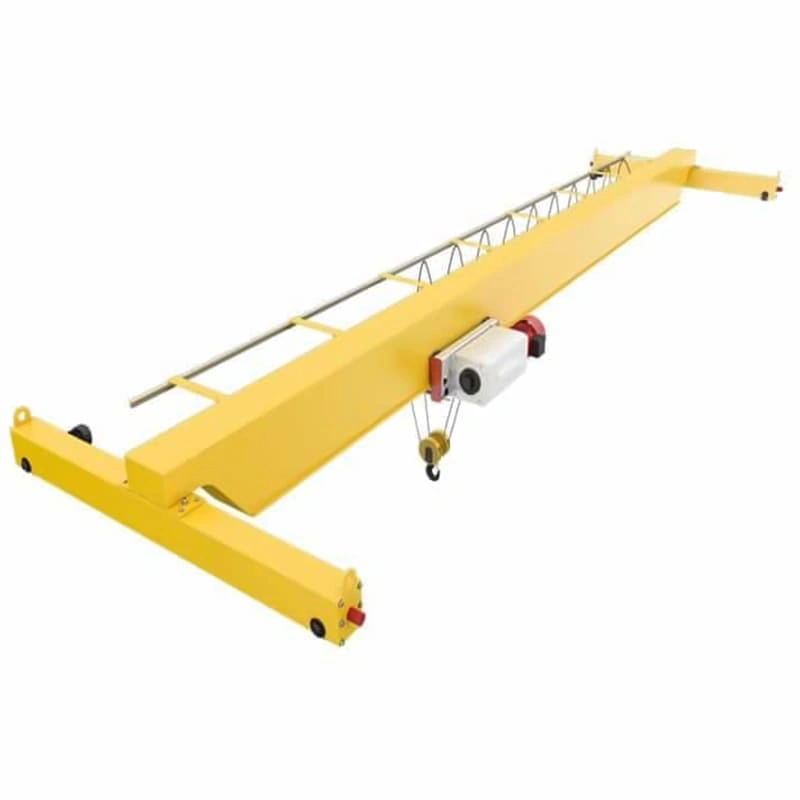
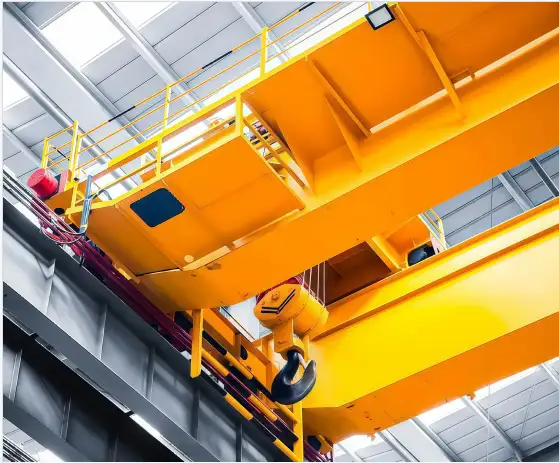
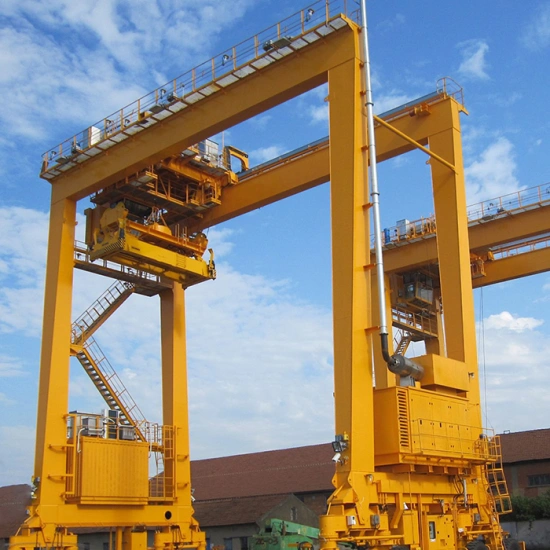
What is an RTG (Rubber-Tyred Gantry)?
An RTG is a mobile gantry crane mounted on rubber tires. It is the workhorse of most container terminals worldwide.
Mobility: It runs on pneumatic tires, allowing it to travel between container blocks.
Steering: It typically has a steering mechanism allowing it to turn 90 degrees to move from one row of containers to another.
Power: Traditionally diesel-powered, modern RTGs are increasingly hybrid or fully electric (using cable reels or busbars) to reduce emissions.
https://www.zehuacranes.com/RTG-Crane-stacking-shipping-containers-in-yard.html
I. RTG (Rubber-Tyred Gantry)
✅ Advantages
High Mobility and Flexibility
RTGs run on rubber tires and can move freely between yard blocks without being restricted to fixed tracks. If a particular area becomes congested, RTGs can be quickly redeployed to provide support, adapting to changes in yard layout or temporary operational needs.Lower Initial Investment
They require no rail installation, power supply network, or extensive ground reinforcement; they can operate on compacted ground. For small to medium-sized terminals with limited budgets or temporary yards, RTGs are an economical and practical choice.Strong Transfer Capability
Equipped with steering mechanisms allowing 90° turns, they can operate across different container blocks and even travel short distances to other yards or maintenance areas, improving equipment utilization rates.Lower Ground Requirements
Compared to the precision rail beds required for RMGs, RTGs have a higher tolerance for ground settlement, making them suitable for older terminals or sites with poor geological conditions.
❌ Disadvantages
High Operational Costs (OPEX)
Traditional diesel RTGs consume significant fuel, tire wear is high (leading to expensive replacement costs), and the engines and hydraulic systems require frequent maintenance. Long-term OPEX is significantly higher than for RMGs.High Environmental Pressure
Diesel operation generates carbon emissions and noise. Even with hybrid power, they cannot achieve zero emissions and face restrictions in ports with strict environmental regulations.Limited Stacking Height
Constrained by tire load capacity and stability, they typically stack only 1-over-5 or 1-over-6, resulting in lower land utilization compared to RMGs.Higher Automation Difficulty
Tire travel paths require real-time correction for deviation, making positioning less precise than on rails. Achieving full automation requires complex navigation systems (e.g., GPS, magnetic nails), increasing costs.
What is an RMG (Rail-Mounted Gantry)?
An RMG is a gantry crane that runs on a dedicated railway track.
Mobility: Its movement is constrained to the path of its rails.
Structure: Often larger and more robust than RTGs, they are designed for higher stacking and faster horizontal travel speeds.
Power: Almost always electric-powered via the grid, drawing power from the rails or a third-party conductor bar.
2. RMG (Rail-Mounted Gantry)
https://www.zehuacranes.com/Efficient-Rail-Mounted-Container-Gantry-Crane-in-port.html
✅ Advantages
High Stacking Density
With a robust structure, they can achieve stacking heights of 1-over-7 or even higher, significantly increasing storage capacity per unit area. This is particularly suitable for ports where land is scarce.Fast Operation and High Throughput
Steel wheels on steel rails offer low friction, allowing for rapid acceleration and deceleration. Gantry travel speeds can exceed 120 m/min, which, combined with automation systems, can greatly enhance terminal throughput.Low Operational Costs and Environmental Friendliness
Powered directly from the electrical grid, they produce zero on-site emissions, and energy costs are much lower than diesel. Maintenance primarily involves the rails and electrical systems, with no tires to replace, leading to lower long-term costs.Easier to Automate
Operating on fixed rail paths ensures precise positioning, making it easier to integrate automatic control systems (e.g., OCR, anti-sway, automatic landing). They are the mainstream choice for automated terminals.
❌ Disadvantages
High Initial Investment (CAPEX)
They require precision-laid rails, power conductor systems, and reinforced foundations. Combined with the higher crane cost itself, the CAPEX is significantly higher than for RTGs. Once the rail system is built, it is difficult to modify.Poor Flexibility
Restricted to fixed rails, they cannot operate across different zones. If one RMG fails, the container block it serves may become completely paralyzed, and backup units often cannot provide quick support.Demanding Ground Requirements
Rails need long-term leveling precision. Uneven ground settlement can cause rail deformation, affecting operational safety and accuracy, and increasing maintenance difficulty.Difficult to Relocate
Moving an RMG to another yard requires dismantling the rails, which is almost equivalent to rebuilding the infrastructure. It completely lacks the flexibility of an RTG.
Selection Recommendations
| Scenario | Recommended Equipment | Reason |
|---|---|---|
| Cheap land, fluctuating cargo volume | RTG | Flexible deployment reduces idle risk. |
| Strict environmental rules, cheap electricity | RMG | Zero emissions, low operating costs. |
| Automated terminal | RMG | Fixed path is ideal for automation control. |
| Limited budget, short-term project | RTG | Lower investment, faster deployment. |
| Ultra-high density stacking | RMG | Superior stacking height capability. |
Summary Table: RTG vs. RMG at a Glance
| Feature | RTG (Rubber-Tyred Gantry) | RMG (Rail-Mounted Gantry) |
|---|---|---|
| Mobility | High (Can move between blocks) | Low (Restricted to rail line) |
| Power Source | Diesel / Hybrid / Electric | Electric (Grid) |
| Stacking Height | Standard (1-over-5 or 6) | High (1-over-7 to 10+) |
| Span | Typically spans 6-8 rows + truck lane | Can span 15+ rows + railway lines |
| Automation | Possible, but complex | Easier (Predictable path) |
| Carbon Footprint | Moderate to High (unless hybrid) | Low (Zero direct emissions) |
| Best Use Case | Medium-sized te |
High-density storage, automated ports |
Conclusion: Which One Should You Choose?
There is no universal "winner" in the RTG vs. RMG debate; the choice depends entirely on the terminal's strategy.
Choose RTG if: You need operational flexibility, are working with a limited budget for yard infrastructure, or your cargo volume fluctuates, requiring you to move equipment to where the work is.
Choose RMG if: You are building a greenfield automated terminal, land is expensive (requiring high-density stacking), or you are looking to minimize long-term energy costs and carbon taxes.
HENAN ZEHUA HEAVY INDUSTRY EQUIPMENT CO., LTD
Email: sale@zehuacranes.com
Website: [https://www.zehuacranes.com/]
Whatsapp:86-19562739544
FAQ
Q1: Can an RTG be converted to run on rails to become an RMG?
A: Technically, it is possible but highly impractical and uneconomical. The structural design, wheel loads, and control systems are fundamentally different. Converting an RTG would require a new chassis, different motors, and the installation of rail bogies. It is almost always cheaper to purchase new equipment designed for the specific application.
Q2: Which crane has a longer operational lifespan?
A: RMGs generally have a longer lifespan. With proper maintenance, an RMG can last 25 to 30 years or more. The structure is typically heavier-duty, and the electric drive systems suffer less shock load than the diesel-hydraulic systems of RTGs. RTGs usually have a lifespan of 20 to 25 years, heavily dependent on tire and engine maintenance.
Q3: What happens if an RMG loses power during operation?
A: Modern RMGs are equipped with emergency braking systems that activate automatically upon power loss to prevent the crane from running away or the spreader from dropping. Most are also fitted with a small diesel-powered "gen-set" (generator set) or battery backup to perform slow, controlled maneuvers to clear the rail and lower containers safely.
Q4: Are RTGs being phased out in favor of RMGs?
A: No. While RMGs are dominant in new automated terminals, RTGs are not being phased out. The global installed base of RTGs is massive. Furthermore, the rise of hybrid and fully electric RTGs is solving the emission problem, allowing them to remain relevant, especially in brownfield expansions where flexibility is key.


