




In modern industrial environments, efficiency and precision are non-negotiable. When standard overhead cranes fall short in confined spaces or complex feeding applications, the rotary feeding overhead crane emerges as the definitive solution. Combining the lifting power of a traditional bridge crane with a full 360° rotating hoist, this specialized equipment revolutionizes how materials are positioned, fed, and retrieved.
But what exactly makes a rotary feeding overhead crane different? When should you choose one over a standard crane? And how can it boost your production line’s throughput? This comprehensive guide answers all these questions and more.
What Is a Rotary Feeding Overhead Crane?
A rotary feeding overhead crane is a specialized type of overhead crane equipped with an integrated rotary feeding mechanism, typically mounted on the trolley or bridge structure. Its primary function is to lift, transport, and precisely feed bulk materials, components, or heavy loads into processing equipment, furnaces, or production lines—all while maintaining control over the direction and angle of feeding. Unlike conventional overhead cranes, which require manual intervention to adjust load orientation, the rotary feature allows for 270° to 330° rotation of the feeding trough or lifting attachment, eliminating the need for manual pushing or repositioning of materials.
This crane is engineered to handle the demands of high-duty cycles, harsh industrial environments, and confined spaces, making it a preferred choice for industries such as steelmaking, metallurgy, waste management, and heavy manufacturing. Its design combines the versatility of an overhead crane with the precision of a rotary feeding system, creating a seamless workflow that reduces downtime, minimizes labor costs, and enhances operational safety.
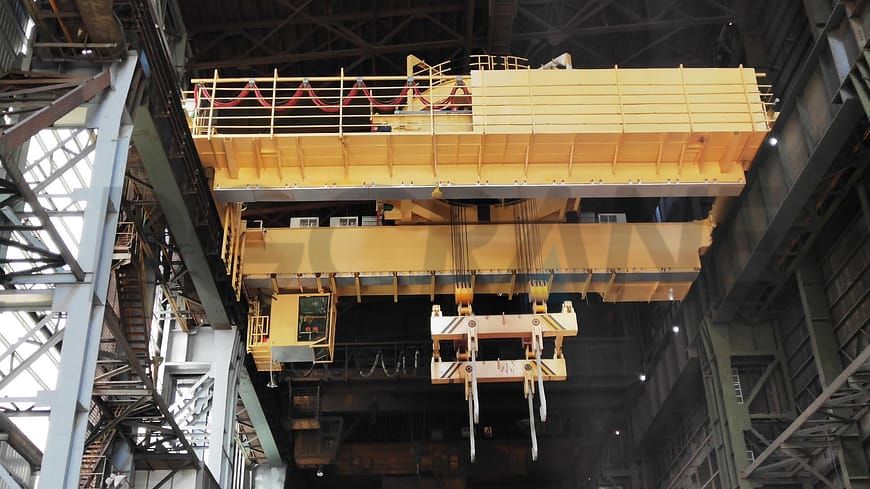
Core Components and Working Principle
To understand the functionality of a rotary feeding overhead crane, it is essential to break down its key components and how they work together to deliver efficient feeding operations:
Key Components
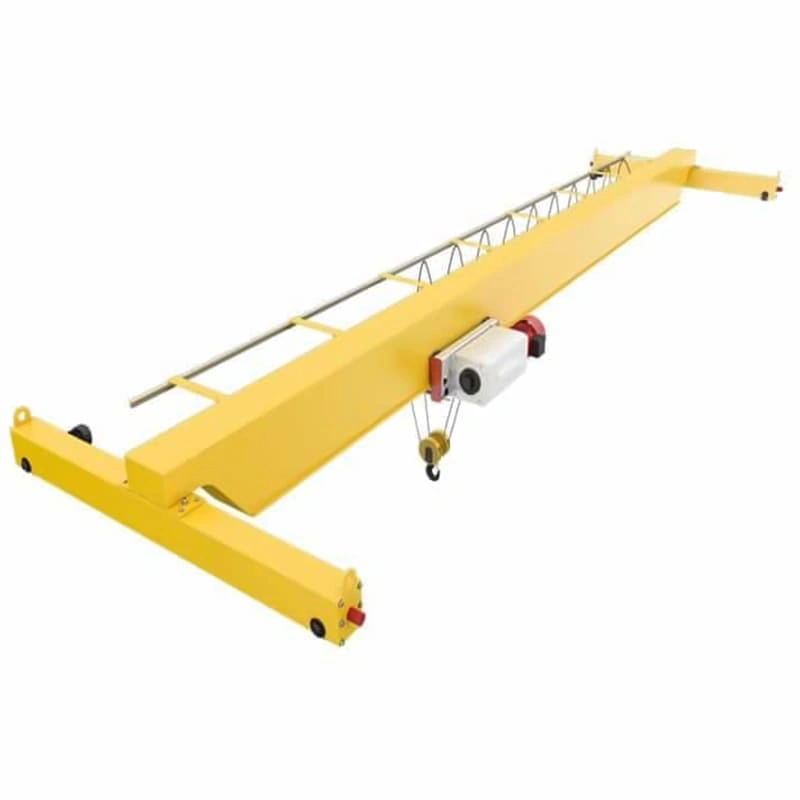
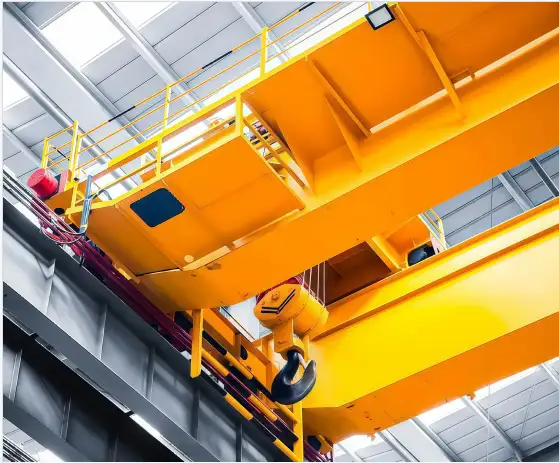
Bridge Structure: The main framework that spans the width of the workspace, supporting the trolley and lifting mechanism. It is typically constructed from high-strength steel to withstand heavy loads and harsh industrial conditions, ensuring stability during rotation and movement.
Rotary Trolley: The most critical component, equipped with an innovative rotary mechanism that enables the feeding trough or attachment to rotate up to 330° (depending on the model). This trolley travels along the bridge, allowing horizontal movement while the rotary feature adjusts the orientation of the load.
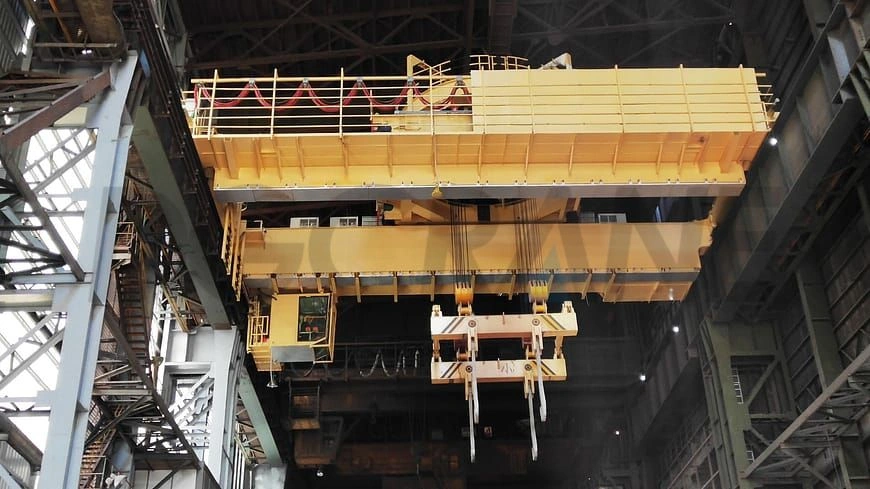
Feeding Trough/Attachment: A specialized container or hook system designed to hold and dispense materials. For steelmaking and metallurgical applications, this often includes a four-point double-linked gantry hook beam group, which distributes force evenly and enables stable lifting and tilting of scrap steel troughs or molten metal containers.
Lifting Mechanism: Composed of winches, cables, and pulleys, this system is responsible for raising and lowering the feeding trough. Advanced models feature two independent lifting mechanisms that allow for precise adjustment of the trough’s tilt angle (up to 75°) to ensure complete material discharge.
How It Differs from a Standard Overhead Crane
| Feature | Standard Overhead Crane | Rotary Feeding Overhead Crane |
|---|---|---|
| Load rotation | None (requires manual taglines) | 360° continuous or indexed rotation |
| Feeding precision | Low – operator must push/pull load | High – motorized rotation aligns load exactly |
| Space requirement | More clearance for manual maneuvering | Compact – rotation happens in place |
| Typical applications | General lifting, storage, maintenance | Automated feeding, press lines, heat treatment |
Working Principle
The operation of a rotary feeding overhead crane follows a streamlined sequence to ensure efficient and precise material feeding:
Load Lifting: The feeding trough is lowered to the material storage area, where it is loaded with bulk materials (e.g., scrap steel, molten metal, or waste). The four-point hook beam system ensures the trough is lifted horizontally, preventing material spillage.
Horizontal Movement: The rotary trolley travels along the bridge to position the loaded trough above the target equipment (e.g., a converter, incinerator, or production line).
Rotary Adjustment: The rotary mechanism on the trolley rotates the trough to align its discharge port with the target equipment. This rotation (up to 330°) allows for flexible positioning, even in confined spaces where the trough is close to walls or other equipment.
Precise Feeding: The lifting mechanism adjusts the trough’s tilt angle (up to 75°) to control the rate and direction of material discharge. This ensures that materials are fed evenly and accurately into the processing equipment, reducing waste and improving process efficiency.
Reset and Repeat: Once feeding is complete, the trough is rotated back to its original position, lowered, and reloaded—creating a continuous, automated workflow that minimizes downtime.
Key Advantages of Rotary Feeding Overhead Cranes
Key Advantages of Rotary Feeding Overhead Cranes
The rotary feeding overhead crane offers a range of benefits that set it apart from conventional overhead cranes and manual feeding methods, making it a valuable investment for industrial operations:
1. Enhanced Operational Efficiency
By integrating rotary feeding and overhead lifting into a single system, this crane eliminates the need for multiple pieces of equipment or manual labor to reposition materials. The automated rotary and tilting features reduce feeding time, allowing for higher throughput—for example, steel mills can add at least 5 tons of additional scrap steel per furnace, significantly boosting production capacity. The ability to move materials in the X and Y directions while rotating also optimizes factory space, enabling sequential placement of feeding troughs in confined areas.
2. Improved Safety and Reduced Risk
Manual feeding operations often involve workers handling heavy loads or working near high-temperature equipment (e.g., molten metal ladles), creating significant safety hazards. The rotary feeding overhead crane eliminates manual intervention, reducing the risk of worker injury from crushing, burns, or material spillage. The four-point hook beam system distributes force evenly, preventing hook breakage, while heat-resistant cab designs and safety sensors ensure operations remain safe even in harsh, high-temperature environments.
3. Precision and Flexibility
The rotary mechanism allows for precise control over the orientation and tilt angle of the feeding trough, ensuring materials are fed exactly where they are needed. This precision is critical for processes like steelmaking, where uneven feeding can affect product quality. Additionally, the crane’s ability to rotate up to 330° and tilt up to 75° makes it adaptable to different equipment layouts and material types, from scrap steel to bulk waste.
4. Cost Savings
The automation of feeding operations reduces labor costs by eliminating the need for ground operators to manually reposition materials. Additionally, the crane’s robust design and reduced downtime minimize maintenance costs, while its ability to handle higher capacities reduces the need for multiple feeding cycles. For facilities that previously relied on rented mobile cranes, the installation of a rotary feeding overhead crane can offset rental costs over time.
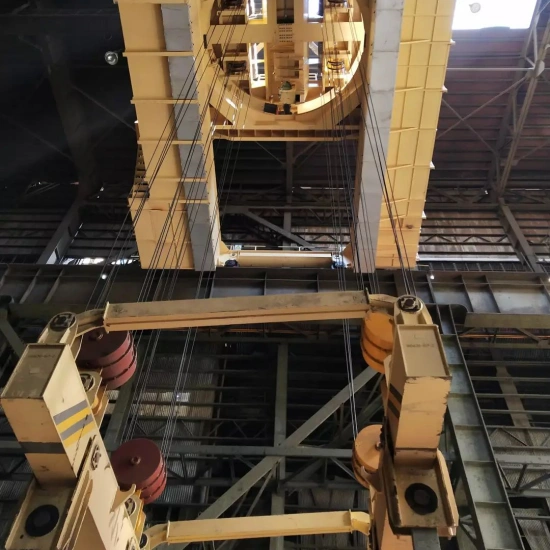
Applications of Rotary Feeding Overhead Cranes
The versatility and efficiency of rotary feeding overhead cranes make them suitable for a wide range of industries, particularly those involving bulk material handling and high-temperature processes. Key applications include:
1. Steelmaking and Metallurgy
This is the primary application for rotary feeding overhead cranes, where they are used to feed scrap steel into converters, transport molten metal, and handle steel ingots. The crane’s heat-resistant design and precise feeding capabilities make it ideal for the harsh conditions of steel mills, where temperatures are high and material handling requirements are demanding. It has become a representative model of the new generation of special cranes in the converter steelmaking process.
2. Waste Management and Recycling
In waste-to-energy plants, incineration facilities, and recycling centers, rotary feeding overhead cranes are used to feed waste materials into incinerators or processing units. Their ability to handle bulky, irregular loads and rotate in confined spaces makes them ideal for optimizing waste handling workflows, reducing manual labor, and improving efficiency.
3. Heavy Manufacturing
In industries such as automotive, aerospace, and construction, these cranes are used to feed heavy components (e.g., engine parts, steel beams) into production lines or assembly stations. The precise rotary and lifting capabilities ensure components are positioned accurately, reducing assembly errors and improving production quality.
4. Paper Mills and Pulp Industry
While standard overhead cranes are common in paper mills for maintenance, rotary feeding overhead cranes are used to feed bulk raw materials (e.g., wood pulp) into processing equipment. Their ability to handle large loads and precise feeding ensures consistent production workflows.
How to Choose the Right Rotary Feeding Overhead Crane?
Selecting the right rotary feeding overhead crane requires careful consideration of your operational needs, environment, and performance requirements. Here are key factors to consider:
1. Load Capacity
Determine the maximum weight of the materials you will be handling. Rotary feeding overhead cranes are available in capacities ranging from small (a few tons) to heavy-duty (35t+35t and above), with some models capable of handling even larger loads for specialized applications.
2. Rotary and Tilt Angles
Consider the required rotation angle (typically 270° to 330°) and tilt angle (up to 75°) to ensure the crane can align with your processing equipment. For applications where the feeding trough is close to walls or other obstacles, a larger rotation angle is essential.
3. Work Environment
Evaluate the environmental conditions, such as temperature, dust, and corrosion. For high-temperature environments (e.g., steel mills), choose a crane with heat-resistant components and a fire-resistant cab. For corrosive environments (e.g., waste treatment plants), opt for corrosion-resistant materials and protective coatings.
4. Control System
Decide between cab operation, remote control, or fully automated control. Cab operation is ideal for operators who need a clear view of the feeding process, while remote control allows for greater flexibility and safety. Automated control systems can integrate with your production line for seamless workflow integration.
Conclusion
A rotary feeding overhead crane is far more than a standard crane with a spinning hook. It is a precision tool engineered to solve the specific challenge of oriented material feeding. Whether you are stamping automotive parts, forging turbine blades, or heat-treating gears, adding rotation to your overhead lifting system unlocks new levels of safety, speed, and accuracy.
ZEHUA is a leading crane manufacturer in China. With decades of industry experience, we have become a trusted partner in the global material handling solution field. We are committed to providing comprehensive professional services tailored to your specific needs. We recommend the most suitable crane products, offer accurate quotations, and design customized solutions. Welcome to contact us.
HENAN ZEHUA HEAVY INDUSTRY EQUIPMENT CO., LTD
Email: sale@zehuacranes.com
Website: [https://www.zehuacranes.com/]
Whatsapp:86-19562739544


