




What is a Rotary Feeding Overhead Crane?
A Rotary Feeding Overhead Crane is a specialized type of overhead crane engineered with an integrated rotary mechanism, typically mounted on the trolley, to enable controlled rotation of the material trough or lifting component. This rotation capability—ranging from 270° to 330° depending on the model—allows the crane to adjust the orientation of the material discharge port with high precision, overcoming spatial constraints and ensuring accurate feeding into target equipment such as converters, furnaces, or processing machines.
Unlike conventional overhead cranes that focus solely on vertical lifting and horizontal movement, the Rotary Feeding Overhead Crane combines three-dimensional mobility (X, Y, and rotational axes) to handle complex feeding tasks. Its robust structure is built to withstand the harsh conditions of industrial environments, including high temperatures, heavy loads, and continuous operation, making it a reliable choice for high-demand applications.
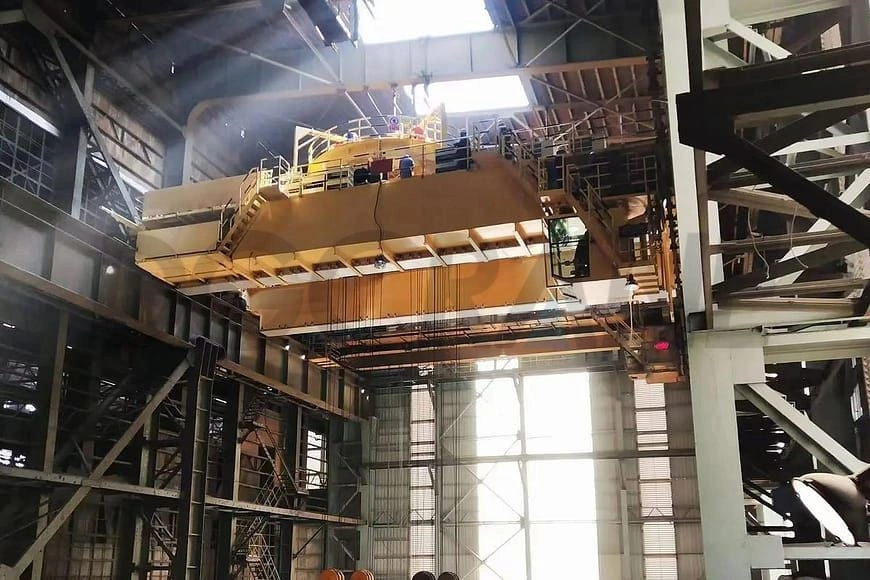
How Does a Rotary Feeding Overhead Crane Work?
The functionality of a Rotary Feeding Overhead Crane revolves around the synergy of three core mechanisms: the traveling bridge, the rotary trolley, and the lifting system. Here’s a detailed breakdown of its working principle:
Traveling Bridge Mechanism: The bridge spans the width of the workshop, traveling along fixed rails mounted on the building’s columns. This enables the crane to move horizontally (Y-axis) across the entire work area, covering large spaces efficiently.
Rotary Trolley Mechanism: The trolley, which carries the lifting component, is equipped with an innovative rotating mechanism. This mechanism allows the trolley to rotate up to 330° (in advanced models) with controlled starting and braking, adjusting the position of the material trough’s discharge port. This rotation is critical for aligning the trough with the target furnace or processing equipment, even when space is limited.
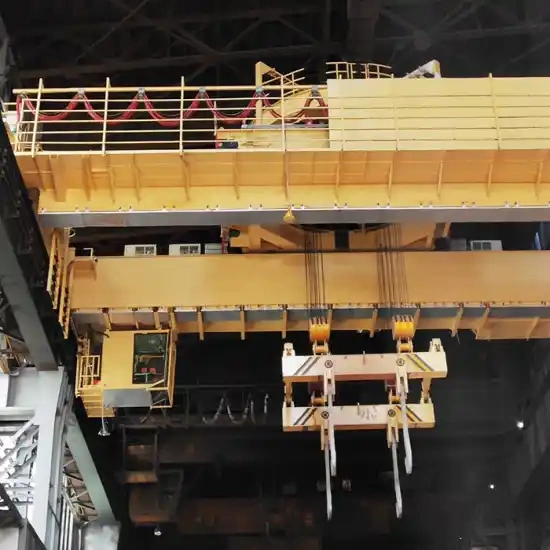
Lifting & Trough Tilting System: The lifting mechanism (typically a hoist) raises and lowers the material trough, while the trough itself can be tilted at angles up to 75° to ensure complete material discharge. Some models feature a four-point double-linked gantry hook beam group, which distributes force evenly, eliminates the need for manual ground assistance, and enhances operational safety.
Key Features & Advantages of Rotary Feeding Overhead Cranes
The Rotary Feeding Overhead Crane offers a range of features that set it apart from standard overhead cranes, delivering tangible benefits to industrial operations. Here are its most notable advantages:
1. High Precision & Flexibility
With its adjustable rotary angle (270°–330°) and precise positioning control, the crane can handle complex feeding tasks in tight spaces. The flexible adjustment of the material trough angle (up to 75°) ensures complete material discharge, eliminating residue and reducing waste. This precision is particularly valuable in processes like converter steelmaking, where accurate scrap steel feeding directly impacts production quality.
2. Enhanced Safety & Reliability
Safety is a top priority in heavy industrial environments, and the Rotary Feeding Overhead Crane is designed with multiple safety features. The four-point double-linked gantry hook beam group distributes load evenly, reducing the risk of hook breakage and ensuring stable lifting. The crane’s sturdy structure is built to withstand high temperatures and harsh conditions, while the controlled rotation and braking system prevent sudden movements that could lead to accidents. Additionally, the automated operation reduces the need for manual intervention, minimizing the risk of worker injury from heavy lifting or exposure to hazardous environments (e.g., near flame-engulfed ladles).
3. Increased Productivity & Efficiency
The crane’s automated rotary feeding capability doubles operational efficiency compared to manual or conventional feeding methods. It can handle high-tonnage loads (ranging from 5 tons to 320 tons, depending on the model) and enables the addition of at least 5 tons of extra scrap steel per furnace in steelmaking processes. The elimination of manual ground assistance and the ability to optimize workshop space further boost productivity, reducing downtime and streamlining production workflows.
4. Cost Savings
By automating feeding processes, the Rotary Feeding Overhead Crane reduces labor costs significantly. Its robust design and low-friction components also minimize maintenance requirements, lowering long-term operational costs. The reduction in material waste and improved production efficiency further contribute to cost savings, making it a cost-effective investment for industrial operations.
5. Versatile Load Capacity & Customization
Rotary Feeding Overhead Cranes are available in a wide range of load capacities (5 tons to 320 tons), spans (10.5 m to 31.5 m), and lifting heights (12 m to 28.5 m), making them suitable for diverse industrial needs. They can be customized to meet specific operational requirements, including power supply, working duty (A7–A8), and environmental conditions (e.g., high-temperature resistance for steelmaking).
Applications of Rotary Feeding Overhead Cranes
Applications of Rotary Feeding Overhead Cranes
The Rotary Feeding Overhead Crane is primarily designed for industries that require high-tonnage, precise feeding in challenging environments. Its most common applications include:
1. Steel & Metallurgical Industry
This is the primary application of Rotary Feeding Overhead Cranes. They are widely used in converter steelmaking processes to feed scrap steel into furnaces, addressing the challenges of limited workshop space, large trough tilting angles, and high feeding tonnage. They also play a key role in the transportation of molten metal, steel ingots, and other heavy materials in casting, rolling, and forging processes.
2. Heavy Manufacturing
In heavy manufacturing plants (e.g., machinery, automotive, and aerospace), the crane is used to feed raw materials (e.g., metal coils, castings) into production lines with high precision. Its rotary capability allows for flexible positioning, even in tight production areas.
3. Foundries & Smelters
Foundries and smelters rely on Rotary Feeding Overhead Cranes to feed metal ores, scrap, and other materials into smelting furnaces. The crane’s high-temperature resistance and precise positioning ensure safe and efficient feeding, even in extreme heat conditions.
4. Other Industrial Sectors
While the steel industry is its primary market, the crane is also used in waste management, mining, and chemical processing, where precise, high-tonnage material feeding is required. Its versatility and customization options make it adaptable to a wide range of industrial needs.
Key Considerations When Choosing a Rotary Feeding Overhead Crane
Key Considerations When Choosing a Rotary Feeding Overhead Crane
Selecting the right Rotary Feeding Overhead Crane for your operation requires careful consideration of several factors to ensure optimal performance and safety. Here are the key points to keep in mind:
Load Capacity & Dimensions: Determine the maximum load you need to handle, as well as the required span and lifting height. Ensure the crane’s specifications align with your operational needs—overlooking these factors can lead to inefficiency or safety risks.
Rotary Angle & Trough Tilting Capacity: Choose a model with a rotary angle and trough tilting angle that matches your feeding requirements. For example, steelmaking applications may require a 330° rotary angle and 75° trough tilting angle to ensure complete material discharge.
Working Environment: Consider the environmental conditions (e.g., high temperature, dust, corrosive substances) and select a crane with appropriate protective features (e.g., heat-resistant materials, sealed components) to ensure durability.
Safety Features: Prioritize cranes with advanced safety features, such as overload protection, emergency stop buttons, controlled rotation/braking, and evenly distributed load hooks. These features are critical for preventing accidents in heavy industrial environments.
Customization Options: Look for manufacturers that offer customization to meet your specific needs, such as power supply adaptation, working duty adjustment, and additional safety enhancements.
Maintenance Tips for Rotary Feeding Overhead Cranes
Proper maintenance is essential to ensure the longevity, safety, and performance of your Rotary Feeding Overhead Crane. Here are some key maintenance tips:
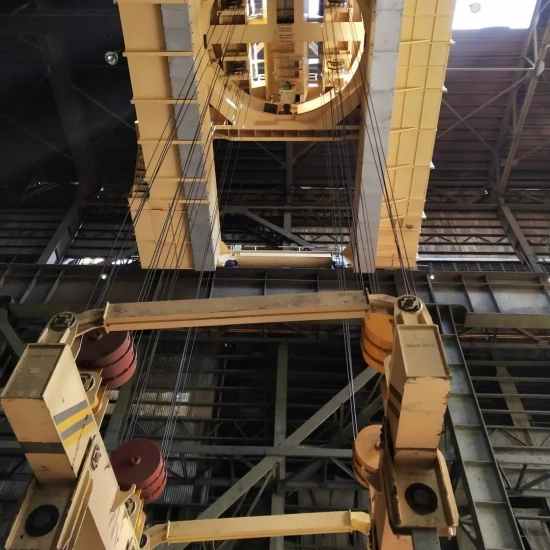
Regular Inspections: Conduct daily, weekly, and monthly inspections to check for wear and tear on components such as hooks, cables, rotary mechanisms, and brakes. Pay special attention to the rotor-housing seal (if applicable) to prevent air leakage or material jams.
Lubrication: Keep all moving parts (e.g., rotary mechanism, trolley wheels, hoist) properly lubricated to reduce friction and prevent premature wear. Use lubricants suitable for the crane’s working environment (e.g., high-temperature lubricants for steelmaking applications).
Cleaning: Regularly clean the crane and its components to remove dust, debris, and corrosive substances that can damage the equipment. This is particularly important in dusty or chemical-intensive environments.
Operator Training: Ensure all operators are properly trained to use the crane safely and efficiently. Training should cover operational procedures, safety protocols, and emergency response.
Professional Maintenance: Schedule annual professional maintenance by qualified technicians to conduct in-depth inspections, repairs, and adjustments. This helps identify potential issues before they escalate into costly breakdowns.
Conclusion
The Rotary Feeding Overhead Crane is a game-changing solution for industrial material handling, offering unparalleled precision, safety, and efficiency in high-demand applications. Its ability to overcome spatial constraints, handle high-tonnage loads, and automate feeding processes makes it an indispensable asset in the steel, metallurgical, and heavy manufacturing industries. By understanding its working principles, key advantages, applications, and maintenance requirements, you can select the right crane for your operation and optimize its performance to drive productivity and cost savings.
Whether you’re looking to upgrade your existing material handling equipment or invest in a new solution, the Rotary Feeding Overhead Crane delivers the reliability and performance needed to meet the challenges of modern industrial operations.
ZEHUA is a leading crane manufacturer in China. With decades of industry experience, we have become a trusted partner in the global material handling solution field. We are committed to providing comprehensive professional services tailored to your specific needs. We recommend the most suitable crane products, offer accurate quotations, and design customized solutions. Welcome to contact us.
HENAN ZEHUA HEAVY INDUSTRY EQUIPMENT CO., LTD
Email: sale@zehuacranes.com
Website: [https://www.zehuacranes.com/]
Whatsapp:86-19562739544


